By Catherine Simpson Bueker
Earlier this spring, I spent five days in the heart of Appalachia as part of a civics initiative I developed over the course of 2025. I am a professor of sociology at Emmanuel College in Boston, Massachusetts where I have taught since 2006. The lack of civic knowledge and civil discourse skills among our students has become increasingly worrisome to me during my tenure. As one small response, I developed a civics curriculum to teach students basic civic knowledge and skills essential for democratic citizenship. That class resulted in me learning the most powerful civics lessons I could have imagined about what it means to be an American, by way of an unexpected visit to Pikeville, Kentucky.
Missing Knowledge and Skills
It all started out routinely enough. Because many students lacked basic civic knowledge—who has the right to confer citizenship, how the president is elected—the curriculum began with reading and discussing founding documents, including the Constitution and the Bill of Rights. As I told my students, perhaps we should know what is in these documents before we start fighting about them.
The course was also structured to develop skills critical for citizenship in a democratic society. The class included an assignment to help students break out of their media silos. They would pick a national news story of their choice and follow it for a week through Fox, CNN, and the AP. The point was to illustrate not only how things were covered by different outlets, but also what was covered. A lead story on one website might not even appear on another.
Debates and civil discourse were included in the syllabus. Students would be asked to list any political topics they wanted to discuss. I suggested Israel/Gaza, immigration, and abortion as just a few possibilities. I told them nothing was off the table. We would first debate the topics and then engage in reflective structured dialogue (a form of civil discourse) on those same topics. The most popular topics included abortion, guns, and transgender athletes. The purpose of these paired exercises was to teach students the value of solid evidence and persuasion critical in debate, and the merit of listening and perspective taking one develops through civil discourse. Both skill sets are essential in a healthy democracy.
An Urban-Rural Partnership
While developing the syllabus during the spring 2025 semester, I had my students in Introduction to Sociology read an ethnographic study set in Pikeville, Kentucky, a coalmining community in Appalachia that has strongly supported Donald Trump after being reliably Democratic for decades. Although the great majority of Emmanuel students are from urban and suburban parts of New England, and are often assumed to be liberal, a few students in the course from rural parts of the northeast reached out to me privately. They could connect with the characters in the book, they understood the challenges of living in rural America, the stereotypes that abounded, and the fear of stating their political views in public. Those conversations with my students caused me to consider something beyond a traditional class structure, but rather a collaboration with someone from a distinctly different geographic and political region of the country. Thus began my partnership with Reverend Doctor Robert Musick at the University of Pikeville.
We worked together through the spring and summer of 2025 planning our course. We very intentionally did not discuss politics. In the fall, via Zoom, we brought together students from my urban, progressive Catholic college in blue Boston with students from his rural, conservative Presbyterian college in red Kentucky. We read and discussed the Constitution and the Bill of Rights. We read Federalist 84, wherein Alexander Hamilton argues against the inclusion of a Bill of Rights. We read Federalist 10 by James Madison, who discusses the dangers of political factions and the need for cross-cutting ties. Back in 1787, he was particularly worried about breaches falling along economic and regional lines. This all seemed shockingly relevant to today. We read an article arguing for reparations for slavery and another article arguing against them. Using techniques developed for civil discourse, the students discussed these documents from their own perspectives, growing out of their own distinct life experiences. They discussed areas of agreement and areas of compromise. While we discussed historic documents, modern day writings, contemporary challenges and public policies, we never discussed politics.
Meeting Face-to-Face
 In December, Rob and a dozen of his students drove fifteen hours through a snowstorm from Pikeville to Boston. We had our last class as a face-to-face encounter that included storytelling, dinner, reflecting on the course, and a visit to a lookout from the highest building in the city. Our guests told us that we needed to come and visit them next. I applied for a travel grant from the Whiting Foundation, an organization that supports travel “to stimulate and broaden the minds of teachers so as to improve and enhance the quality of their classroom instruction.” The great majority of these grants go to international travel; I explained in the application that Appalachia was as foreign to me as crossing an international border. My application was funded and in April 2026, I flew from Boston to Charlotte, North Carolina to Huntington, West Virginia and then drove for two hours. It is easier and faster to get to much of Europe and Latin America from the northeast than it is to get to eastern Kentucky.
The Lessons of Pikeville
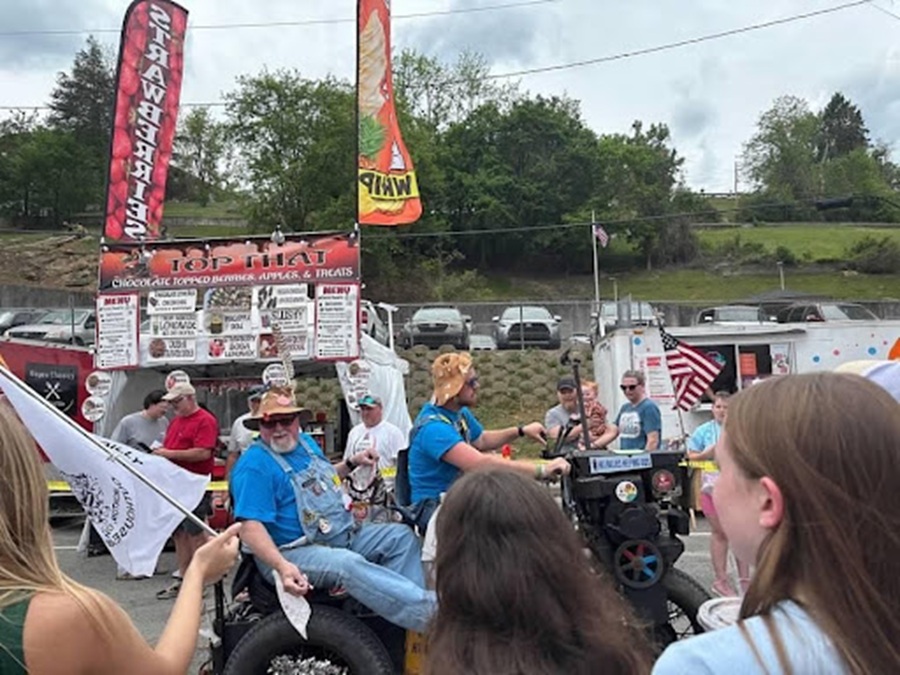
Hillbilly Days Parade
This brief trip to Appalachia transformed my understanding of citizenship in the United States. Having written and taught on issues of citizenship acquisition and voter turnout for twenty-five years, I have come to realize those are necessary but not sufficient acts to sustain a healthy democracy. It took this trip to Pikeville to fully bring that lesson home.
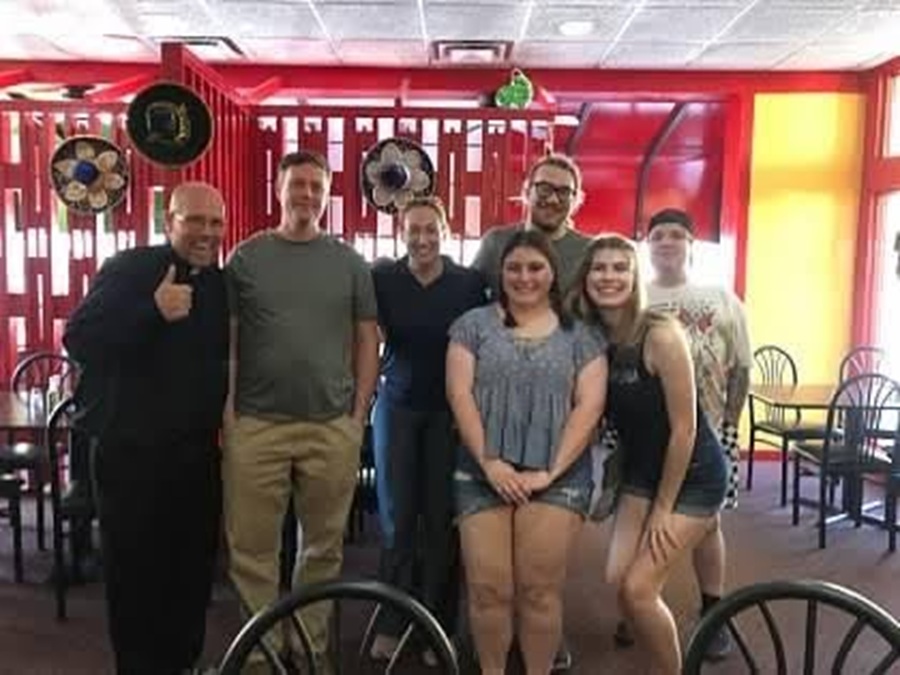
Dinner with my Pikeville friends
In Pikeville, I attended Hillbilly Days, a three-day festival that celebrates Appalachian culture while raising money for Shriners Children’s Hospital in Lexington and observed Rob, who exemplifies the kind of American citizen Alexis De Tocqueville observed almost two hundred years ago. As the University Chaplain, Rob takes his students around the country and abroad to do volunteer work, has an active and growing congregation, runs a food pantry, and works at the polls on election day. De Tocqueville worried that Americans’ extreme focus on individual liberties could undermine a necessary focus on the common good in society, but our religiosity worked to balance the two potentially competing goals. Rob illustrates the ability to balance a deep commitment to individual freedoms and equality for all, and recognize the bigger picture. Citizenship for him involves civility, daily renewal, and cross-cutting ties.
People I met, at the hotel where I stayed, the distillery I visited, or at the university hosting me, knew immediately I was “not from around here.” They were wary, but also a bit curious. I never initiated political exchanges, but when the conversation turned in that direction, I listened and asked questions. Many of them wanted to know what I thought. We had real conversations about everything from Civil War monuments and the second amendment to taxes and the environment. I also attended a morning of political stump speeches. After emphasizing everyone’s first amendment rights, the moderator stated there was to be no “booing” or shouting down speakers. There was not a single jeer the entire morning. When a candidate’s allotted time was up, a blue grass band struck up a song and the speaker left the stage.
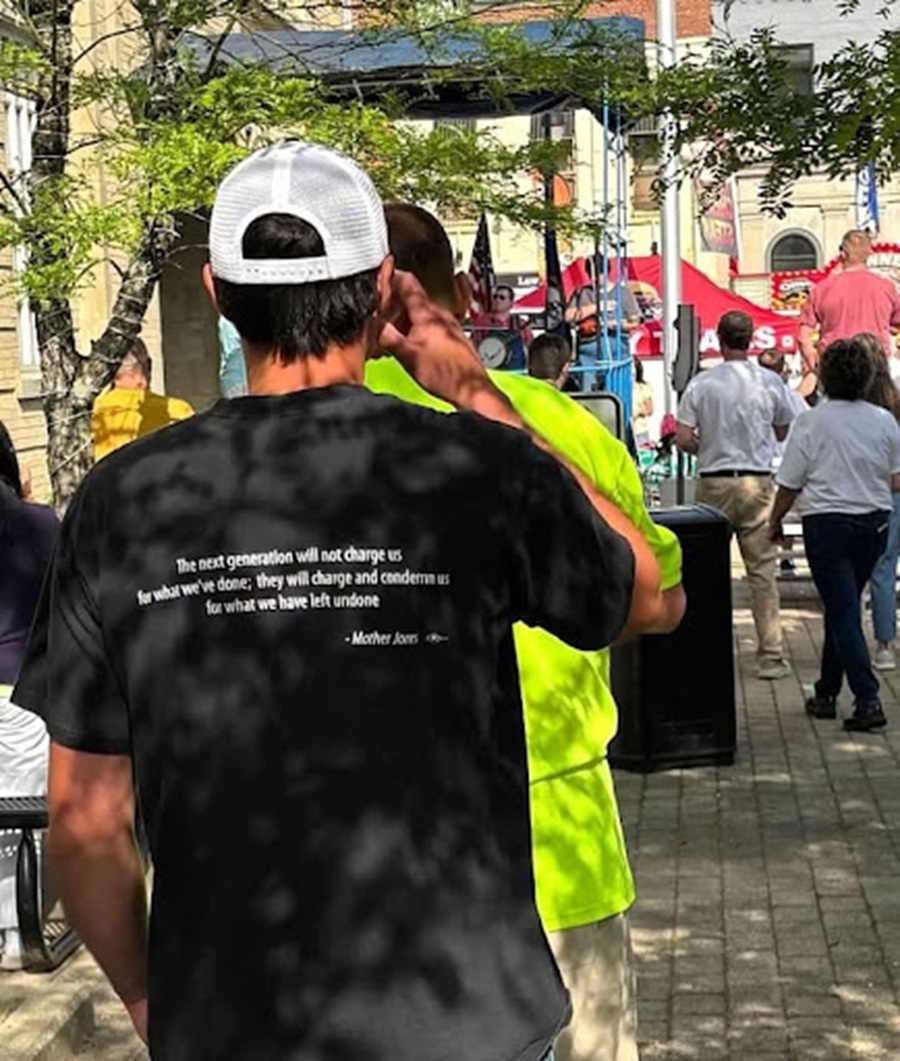
Saying the Pledge of Allegiance before political stump speeches
Through Rob and Hillbilly Days, I witnessed the contrast between citizenship as flag waving and virtue signaling and citizenship as daily mutual-aid, the hard work of helping neighbors and making communities stronger. I met a custodian at the university whose colleagues were helping repair her home after it had been hit by two trees. I met three women who make up Coaltown Dixie, a bluegrass band, who have started an organization called Mountain GrrL Experience to mentor young women in the area. I saw hundreds of Shriners raise money for the local children’s hospital. Hard work in the service of their fellow citizens, it’s clear, has gotten them much closer to the individual ideal of “the pursuit of happiness,” the happiness that grows from eudemonic rather than hedonistic behaviors. Robert Putnam, who decades ago bemoaned our increasing individualism, isolation, and lack of community engagement, would be heartened to meet the people I met in Pikeville.
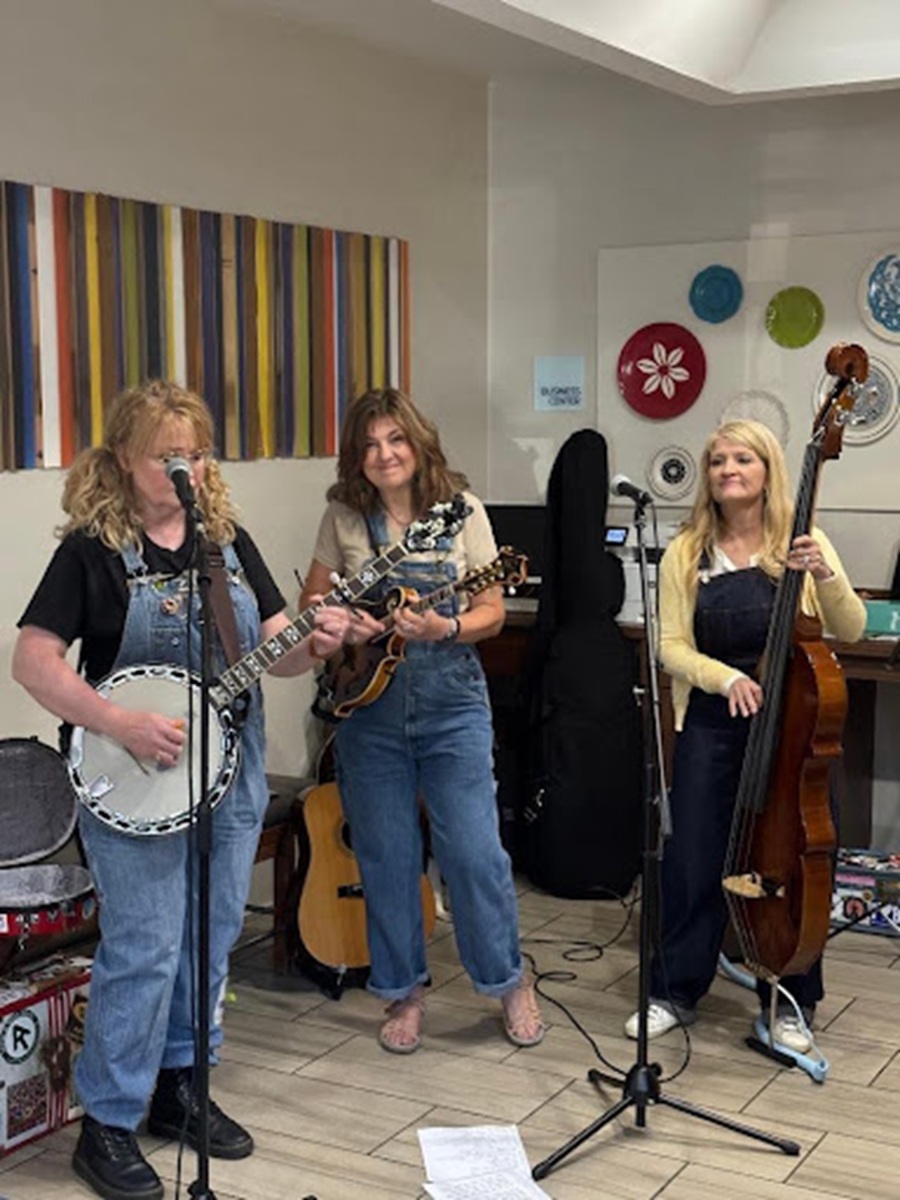
Coaltown Dixie performing
My few days in Appalachia also provided evidence of the complexities of modern life. I spent an afternoon with a young man who is pro-gay marriage and pro-life; I had lunch with an aging progressive Democrat (read: “hippie”) who told me he got his first gun when he was six and continues to hunt; I sat with a deeply religious transgender American. None of them line up neatly with our assumptions of ideology and politics. But all of us should and can recognize and accept these cross-cutting and fundamentally human ties that James Madison identified as essential to avoid the factions that could destroy us as a country. Metaphorically “extending the sphere” involves viewing other Americans first and foremost as neighbors, friends, and fellow citizens, and not through the prism of partisan political labels.
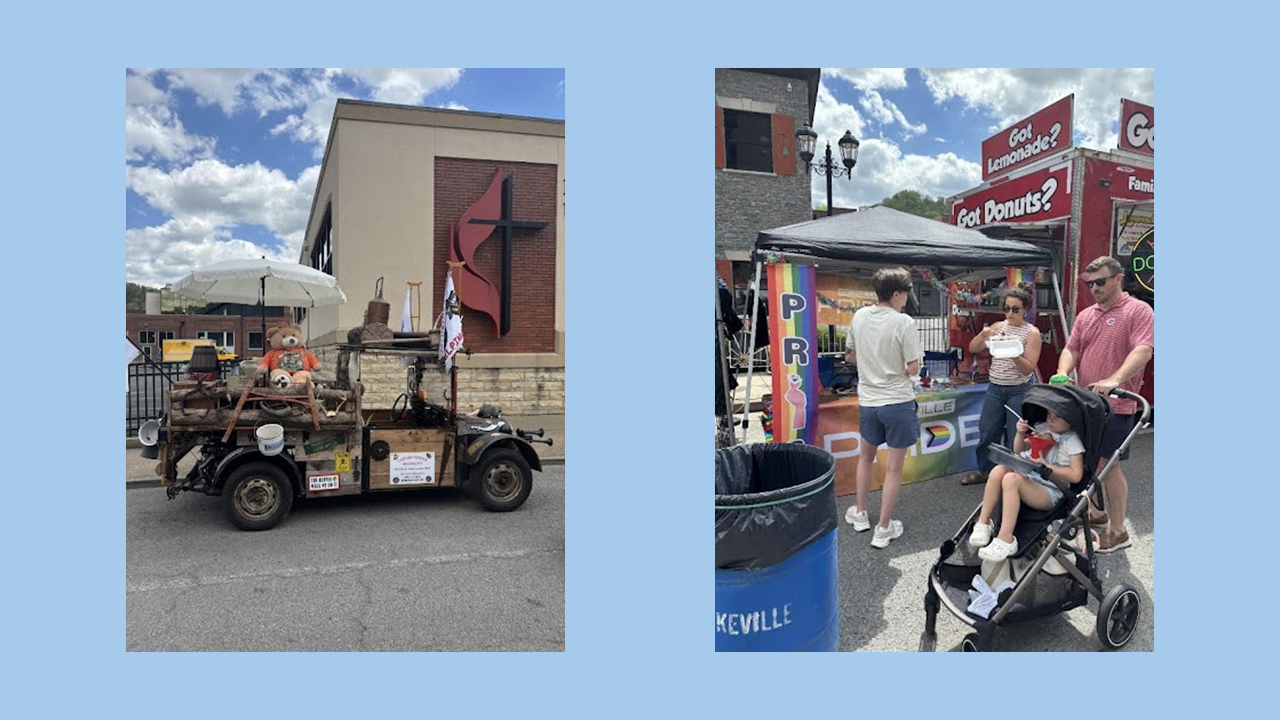
Scenes from Hillbilly Days
For me – a lifelong resident of the northeast with an advanced degree, a career in academia, and a high-income zip code – it took a visit to Kentucky to highlight both what we have in abundance and what we often lack. As Colin Woodard has noted, regions like “Yankeedom” and “New Netherland” outperform regions like Appalachia and the deep south on everything from health and education to credit scores. But the greater social and economic options in communities with higher levels of “density and degrees” make us far less dependent on one another than those living in places like Pikeville. If we don’t like someone’s political positions, we simply do not invite them to dinner. A tree falls on our home, and we just pay for someone to take it away and fix the roof. My takeaways from Pikesville, however, are neither about romanticizing rural poverty nor advocating rugged individualism. They are about seeing the value rather than the weakness of mutual dependency, both socially and economically, about having a sense of linked fate with those around us. They’re about risking being branded naïve and simplistic, by raising questions about what we think, say, and do, and reenvisioning citizenship to help realize George Washington’s hope that our “union and brotherly affection may be perpetual.”
Changing Habits of the Heart?
Upon my return to Boston, I carried out a pilot evaluation of the course, surveying Emmanuel students who took the class and those who did not. I had planned to wait several months before data collection as I wanted to see whether there was any “stick” to what we had worked on in the fall. Although a small sample (n=66), I found that Emmanuel students who had taken the class months earlier reported higher levels of warmth towards those of different racial and ethnic groups, and those of different sexual orientations, than Emmanuel students who had not taken the course. The former group also reported a higher likelihood of having a conversation with someone supporting the opposing political party, and of being more likely to seek out an alternative viewpoint or evidence that challenges one’s beliefs on an issue of great importance.
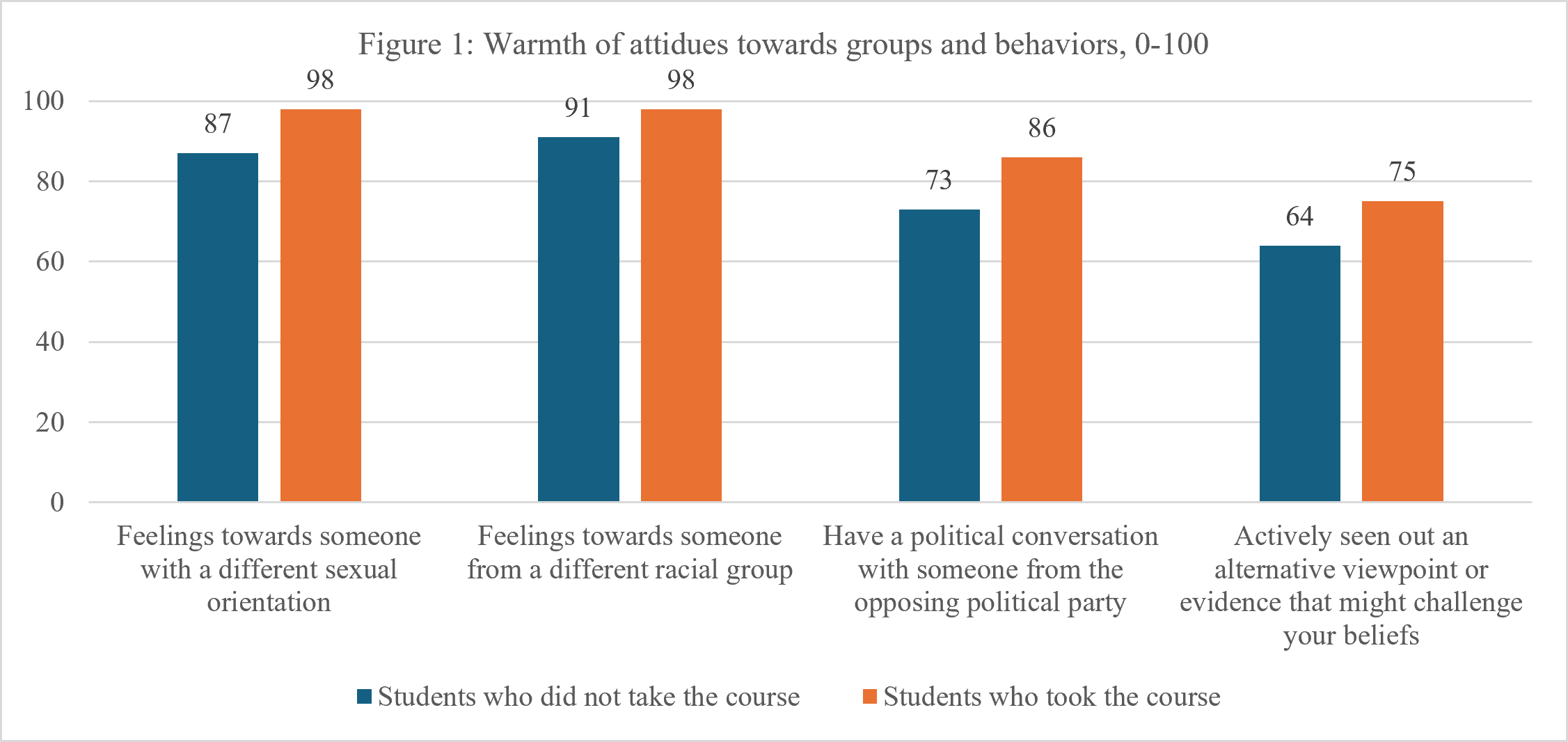
Rob and I will start working with our second cohort of students this fall and I will, once again, survey students to see if the course has any effect. Although my hope is that these initial results are reproduced, I can say without doubt that Rob, his students, and my visit to Pikeville have had a profound effect on me and my understanding of citizenship.
Catherine Simpson Bueker, PhD, is a Professor of Sociology and the Director of the Honors Program at Emmanuel College. She is the author of a new book, “Beyond White Picket Fences: Evolution of an American Town.”