By Katy Rubin
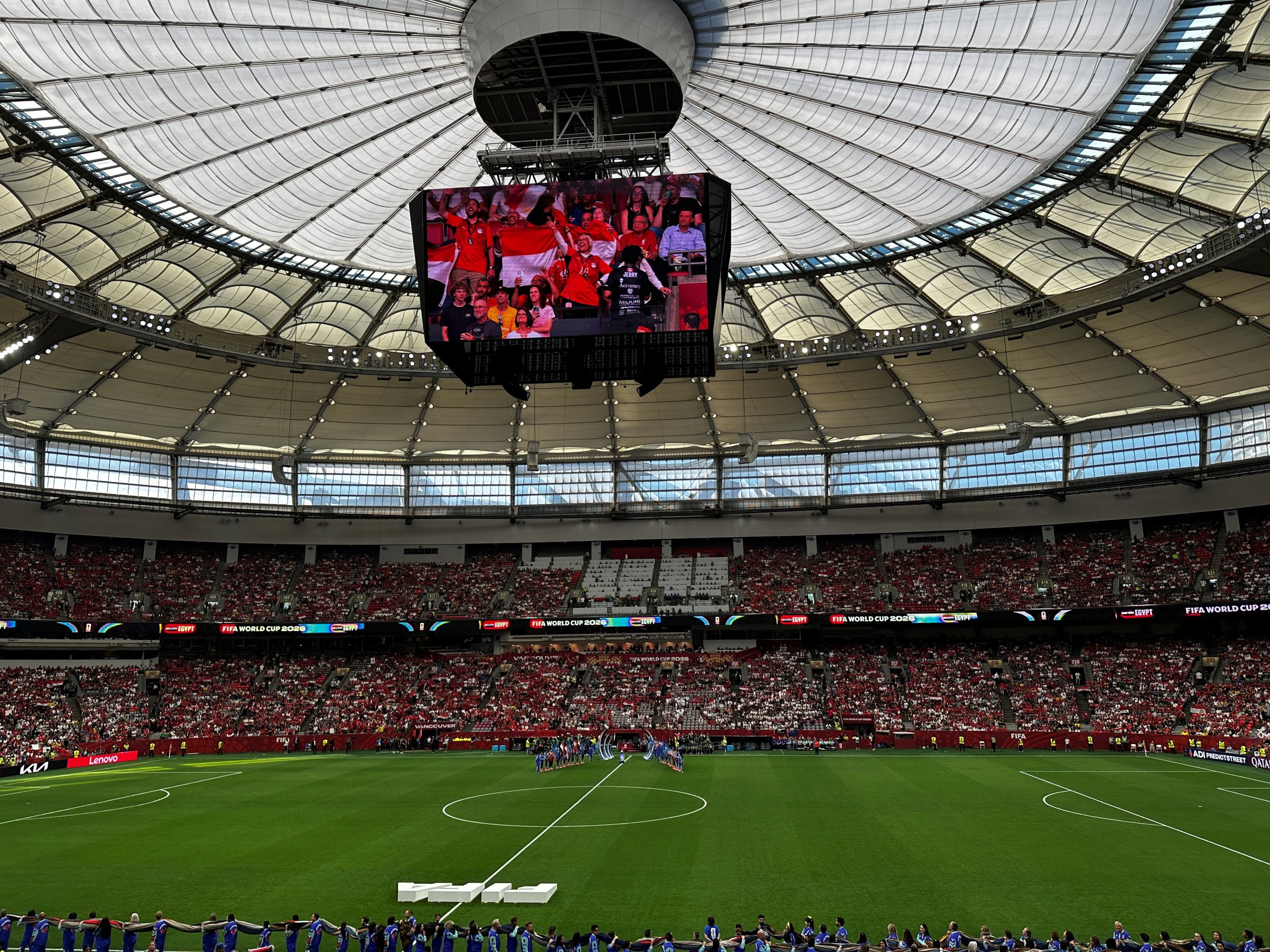
Photo credit: Ibrahim Bazyan
I’m not a big football fan. I like watching my 7-year-old play on the local community team, and I more or less understand the rules: you must kick a ball into a goal. I appreciate how the game encourages players, especially young people, to cooperate and live with loss, but my attention span for football is pretty short. As a newly naturalized citizen of the UK based in Manchester, a city populated by passionate football fans, I watched England’s recent World Cup matches out of a sense of obligation. I couldn’t help but admire the graceful moves, fancy footwork, and dramatic expressions of the players. However, what grabbed my attention this past summer was the insatiable desire by my neighbors, and a majority of citizens of the world, to participate wholeheartedly. Football, for a few weeks, felt irresistible.
What if democracy were equally irresistible?
I am a practitioner and designer of participatory democracy, working towards a world in which everyone has the power to shape the rules that govern their lives and communities, towards a more just and equitable future. In the midst of the current crisis of democratic backsliding, I believe we must transform democratic practices and institutions so that engagement is not just necessary, but joyful and enticing. Democracy is a long game: we won’t win everything in the first round. It must be irresistible, not only so that people want to take part the first time, but so that they’ll keep coming back for more.
First, here are five ways we can define what is ‘irresistible.’
- Engaging in activities that are both fun and serious: serious fun. In this context, fun means learning new skills, at a pace we can stand, in an environment that celebrates our progress. My kids cannot resist playing games over and over, from video games to board games, in an attempt to conquer new tricks and beat their own records.
- Existing in spaces that recognize and include our whole selves: our cultural identities and diverse interests, as well as our physical, rational, and emotional realities. Such spaces, from Zumba classes to Eid picnics, spark a sense of belonging, while research shows that feeling excluded is experienced much like feeling physical pain – which people strive to avoid at all costs.
- Solving problems that are urgent to our survival and the preservation of our dignity, wellbeing, and happiness. If a person is forced to live without enough food or a safe place to shelter, or without a sense of belonging and inclusion, then finding a solution to these needs becomes a matter of urgency.
- Understanding our participation as indispensable to an outcome. If an election looks like a close call, then it feels important to show up and vote. If our neighborhood is undergoing a participatory budgeting process, where public funds will be allocated directly based on residents’ votes, then participation could mean the difference between local schoolkids accessing a crucial resource or going without. When we experience the vitality of our presence, celebrating the successes also becomes an irresistible part of the journey.
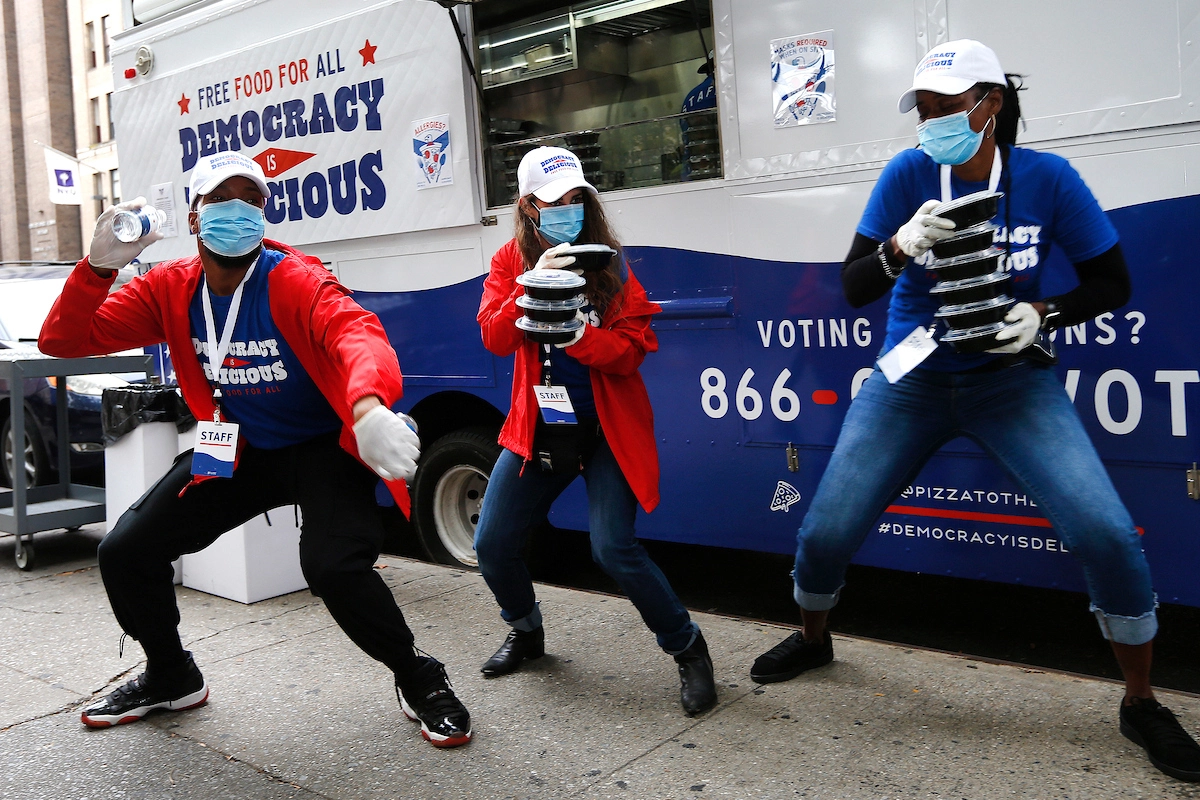
- Experiencing beauty or delight embedded within the everyday. From sweet frozen popsicles at NYC Mayor Zohran Mamdani’s events to publicize a new ‘rent freeze’ legislation, to disco dance parties on voting lines in Philadelphia, to colorful murals that tell the story of a neighborhood, these are places we return to, or experiences we’re willing to wait for.
Jason DeCrow/AP Content Services for Pizza to the Polls
So: what’s so irresistible about football?
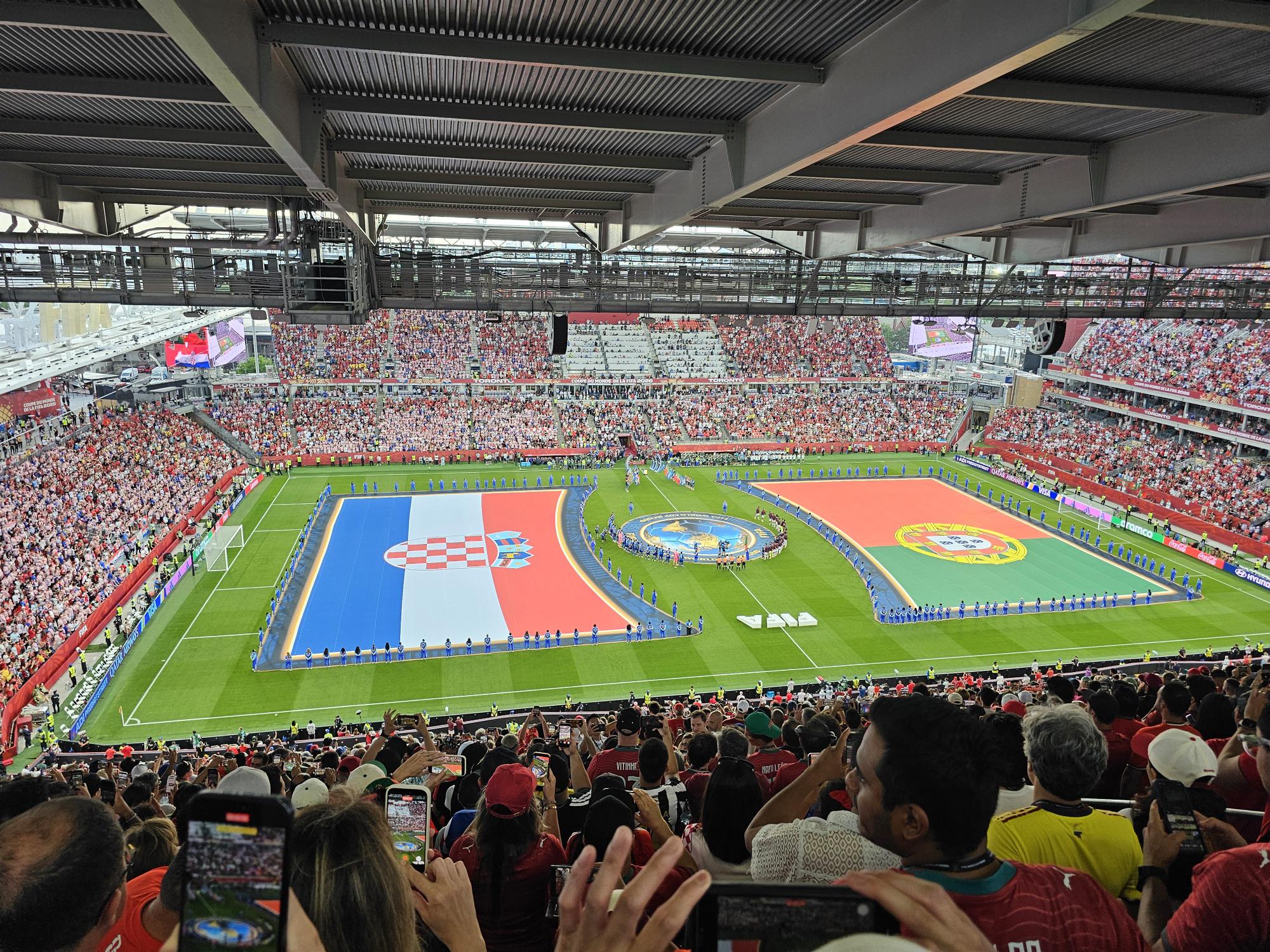
Photo credit: Nick Vlahos
Each match is a question to be answered in a set period. Over 90 minutes (or longer, when the Cup demands a hydration break!), we will learn, and for the most part trust the veritability of, the outcome. It might not be easy, and indeed the dramatic tension rises when the teams present each other with a challenge, but in the end one team will win. Discovering how the game will unfold, and supporting the progress of players with whom we identify, is what makes it fun. According to Raph Koster, author of A Theory of Fun for Game Design, ‘Fun with games arises out of mastery. It arises out of comprehension…. In other words, with games, learning is the drug. That’s what games are, in the end: teachers. Fun is just another word for learning.’
Depending on where you’re watching, the stadium benches or the pub stools are spaces that welcome both rational and emotional engagement. You are encouraged to cheer, moan, hope, worry, cry, even to love strangers. However, football spectatorship also rewards your understanding of the rules of the game, the history of the teams, and the strategies being deployed. Multiple ways of learning and engaging are encouraged along the way.
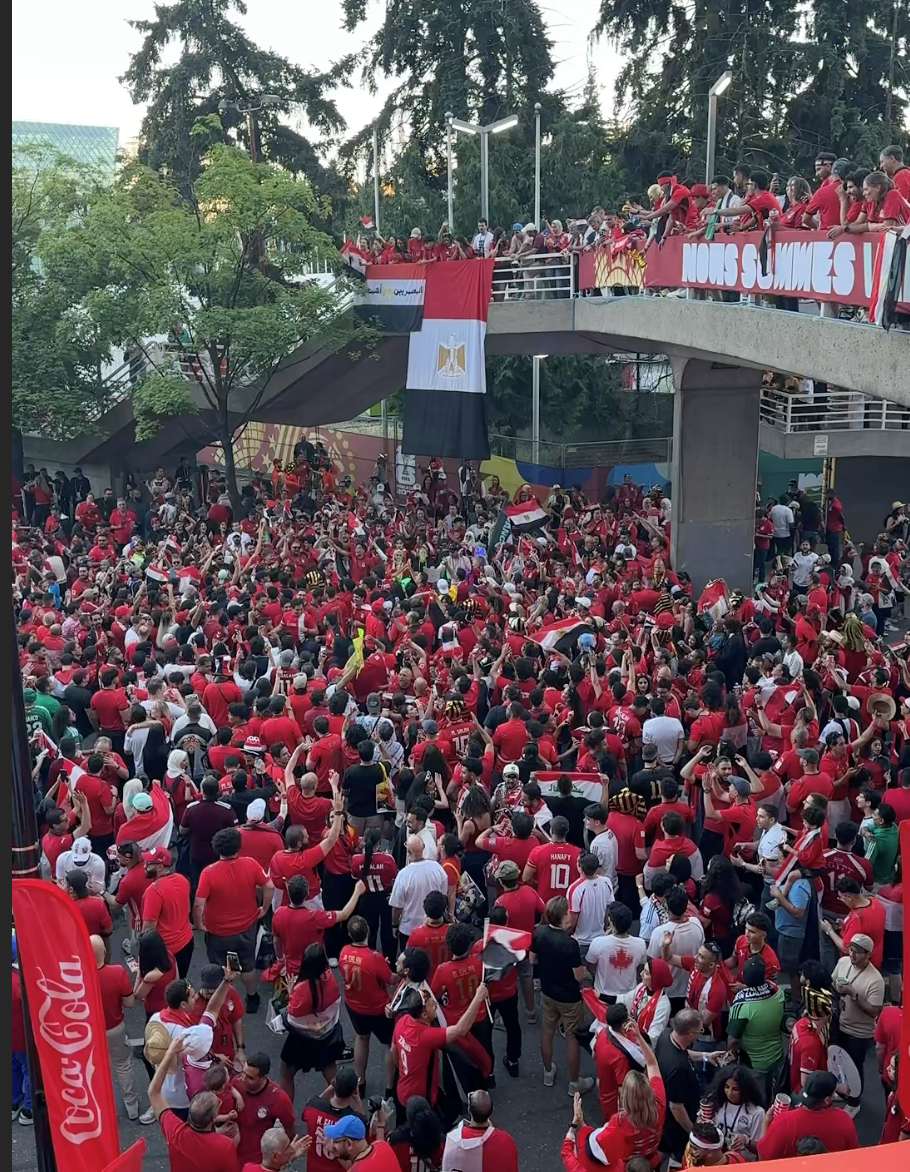
Celebration is central to the design. There’s always a chance our team will win, even if the odds are long: our role is to celebrate the beautiful football they play, and sympathize with the players and fellow fans if they lose. The event isn’t over when the whistle blows; the celebrations can last for hours. Beauty is not tangential, either: it is an aesthetic experience, the dance across the field, the colors of the kit, and the face paint and signs across the stadium.
During a football match, we feel a sense of belonging. For those 90 minutes, we are among our peers. Supporting a team creates a sense of unity among strangers, for better or for worse, as that often leads to a hatred of the opposition. That unity might look like national pride, as during the World Cup, or it might transcend borders, as I notice whenever I travel to another country and mention that I live in Manchester. People light up and ask if I support City or United. It might be Bogotá or Barcelona, but support for Manchester United (and sometimes for City) is equally fierce. The game provides an outlet for those ‘unheard emotions’ that have been identified as a root cause of democratic backsliding, along with unmet needs, which our existing democratic institutions don’t often prioritize as legitimate forms of communication.
Finally, we are actively invited in. Without the fans, there’s no point to the game. Our role is crucial: it is a performance, and we are also on the stage. We are not the players, but even when we’re watching in the living room or in the pub, we understand that our team needs our support. Sometimes, fans sway the result, by singing or chanting or otherwise encouraging the beloved team and distracting the opposition. It’s not enough for a fan to find out the score or the outcome later: they must be tuned in for every second. This is why you — well, not most of us — might pay up to $10,000 for a ticket to watch Mexico v. England in the Azteca stadium. It’s so irresistible, it’s priceless.
Around the world, people are experiencing increasing isolation and loneliness, brought on in part by interactions with technology. But the football match is happening now, in the present, and the experience is improved if it is shared with other human beings. Just ask the workers at thousands of overflowing pubs across the UK during each England match.
In my own practice of legislative theatre, the lines between spectator and actor are purposefully blurred. Audiences watch a play created by their own peers about real policy issues, and then engage in dialogue around the problems, finally becoming spect-actors, entering the stage to improvise and test out new policy ideas. This transformation from viewer to change-maker, from passive citizen to active co-creator, is part of the story of the ardent football fan.
The irresistibility of football hit home for me during the recent Mexico-England match. I was flying to Guadalajara for a research project on creative responses to housing financialization. My trip included a layover in Houston, Texas; the connecting flight to Guadalajara was scheduled for exactly the time of the match. Since it was the knockout stage, either winner would continue to the quarter finals, and the loser would have to bow out. The stakes were high.
The passengers were mostly Mexican citizens returning home from Texas, and missing the game was not an option. The airline offered Wi-Fi for a fee, which it seemed that nearly everyone was happy to pay. Priceless. Meanwhile back home in the UK, friends were awake till 5am following along. Neither sleep nor 33,000 feet of altitude could get in the way of being present for the match.
Shortly into the flight, people began to realize that one passenger, seated in a window seat towards the center of the plane, was watching on a tablet. He had a bigger screen, making it easier to see the plays and, more importantly, to watch together! A crowd began to form in the aisle, until 20 people were huddled around one man’s tablet, urgently discussing the merits and disadvantages of the team’s strategy. Gasps and cheers echoed around the plane. In 20 minutes, a community had formed; even those still in their seats were chatting with their neighbors and laughing in delight to see the crowd standing in the aisles. Indeed, it was difficult for the attendants to get the viewers to sit down when we hit a pocket of turbulence.
The contrast with the existing design of our democracy is stark. Far in advance of elections in many countries, politicians begin pleading with citizens to vote. Parties and candidates overwhelm residents with phone calls, letters, door knocks, TV ads, text messages, carrier pigeons…and still, the turnout in the most recent UK general election was the lowest in 25 years. In the UK’s local May 2026 elections, I had my first opportunity to vote as a British citizen, which was both exciting and terribly disappointing. The candidates were less than inspiring, while my many ideas for how the neighborhood could be improved were not welcomed at the (empty) polling station. Show your ID and then face the wall, alone and in silence, and tick a single box. That’s the democratic experience.
As the World Cup ended, I was left with two big questions. How do we re-design our democratic practices to reflect the characteristics of a football match: fun, learning, belonging, and meaningful participation? And conversely, how do we bring opportunities for shared decision-making into such spaces, like organized sports, that already succeed at building community, focusing attention, and sparking hope?
This is not to say that football is a purely positive space. In Manchester, the streets and public transport after big matches are often spaces of aggression, racism, or violence. Women and girls regularly avoid areas around stadiums on game days, due to increased harassment; statistics show that domestic abuse rises 26% when England wins, and 38% when England loses. Meanwhile, players from the global majority regularly face racism and discrimination on and off the field. The governing body of the World Cup, FIFA, has earned billions of dollars while exploiting workers and directly or indirectly causing gentrification, displacement, and eviction.
However, if we could transpose the very best of football onto the equitable, joyful, and sustainable future I imagine and know we deserve, football could be an opening for all sorts of participatory governance. And that future is already being realized. To close with one example:

Photo credit: KDI Projects in Kenya
I recently visited Kibera, an informal community or so-called ‘slum’ in Nairobi, Kenya. In Kibera, a group of young people have formed a casual football club, meeting three times per week — around work, education, and family responsibilities — to practice. During practices, the young people who founded the club talk to newer members about issues that are important to them in the community: health and hygiene, drinking water, or economic opportunity. Over time, new recruits to the team are invited to take part in community projects supported by local participatory organizations, like building roads, fixing bridges, and improving access to clean water. Meanwhile, the team practices so often that they play at a high level and regularly enter regional tournaments. For each victory, the team receives prize money. The players collectively agree to reinvest that money into those community projects, which in turn offer paid employment to the team members and to many other young people. The community now has new toilets and running water which contribute to greatly improved health outcomes, a new road which allows access to said clean water, and a successful football team made up of a highly engaged and politicized young population. Goooooooaaal.
In Kibera, football is an invitation, an open door. Around the world, millions of people gather daily in stadiums, pubs, parks, and living rooms to watch a match, not only during the World Cup but year-round. To me, these gatherings add up to millions of missed opportunities for dialogue, idea generation, and collective decision-making. Fans could brainstorm, deliberate, propose and vote on issues that relate to their experience of taking part in football, from the transport options they used to get to the match or viewing location, to the prices and accessibility of sport and culture, to the physical education their children take part in, to the types of food available in the stadium and around the city, to the public or private communication channels that broadcast the match, to the possibility of community ownership of pubs. The list goes on.
YASUYOSHI CHIBA/AFP via Getty Images
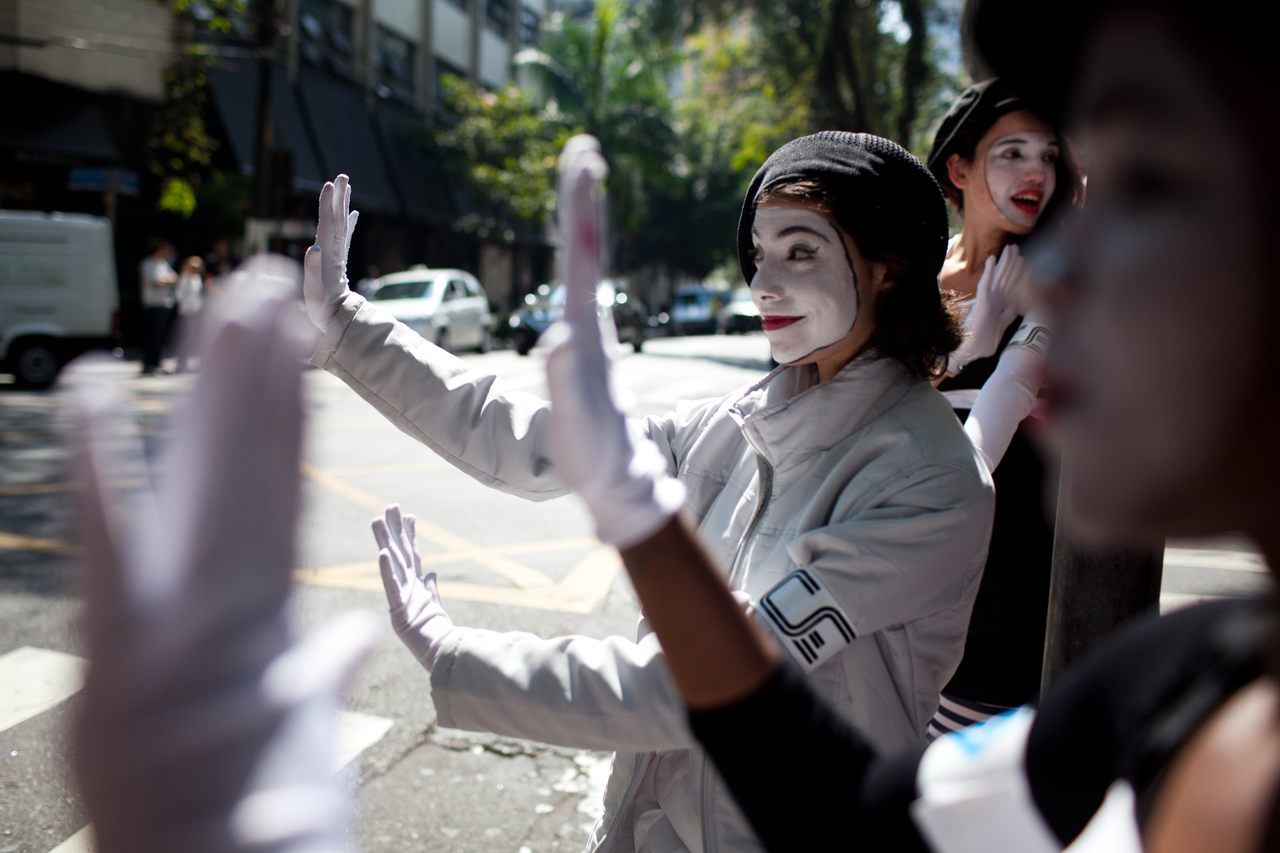
On the flip side, more traditional decision-making spaces, from parliaments to town halls, could follow football’s lead, putting games, art, learning, beauty, emotions, citizen leadership, and culturally diverse celebrations at the heart of their work, to lead with irresistibility. It’s already happening: from the fishers and fishmongers using card games to develop a sustainable fishing management policy in Wales, to the mime artists enforcing the importance of traffic calming measures in Bogotá, and many places in between.
The existing spaces and practices of democracy are not sufficient to meet the current and intersecting global crises. Democracy must break out of the four walls of the council chambers, and policymaking must be reimagined for inclusivity, fun, and relevance. The truth is, I’m still not such a football fan. But if we could realize a future of irresistible football and democracy for everyone… I’d be the first one in the stands.
Katy Rubin is a Legislative Theatre practitioner and strategist based in the UK, and director of The People Act hub for creative civic practice. She works in partnership with local and national governments, advocacy organizations, and community groups to co-create equitable and innovative public policy through participatory processes that are joyful, creative, and inclusive. Her work with the Greater Manchester Combined Authority was awarded the International Observatory of Participatory Democracy’s 2022 award for Best Practice in Citizen Participation.