By Ronnie Ward
In a way that perhaps no other city can claim, Dubuque, Iowa, is a showcase for civic muscle. As city manager for the past 33 years, Mike Van Milligen has launched a vast array of programs and public-private partnerships that helped pull the community back from economic distress to become a thriving, sustainable, and inclusive place. His wife, Nancy Van Milligen, has driven similar change from the nonprofit side: in 2003, she founded the Community Foundation of Greater Dubuque, which has since built the capacity of the local nonprofit sector and created programs that reinforce the city’s welcoming, equitable atmosphere.
Together, their work reflects a broader story of resilience, commitment, and development. As Dubuque has grown in diversity and opportunity, community leaders and advocates have stayed focused on building strong partnerships, investing in sustainable efforts, and supporting those who need it most. Affectionately nicknamed the “Masterpiece on the Mississippi,” Dubuque has won the All-America City award five times in a 12-year span and is proof of how coordinated civic effort can change a city’s trajectory.

That trajectory wasn’t always upward. Despite a growing population through the 1960s and expanding service, retail, and education sectors, Dubuque hit a crisis point in the 1980s: unemployment averaged over 8% for the decade (spiking to 23% in January 1983), and the city lost nearly 10% of its population. In response, grassroots organizers and leaders from both the public and private sectors began the work of rebuilding neighborhoods, increasing civic engagement, and redeveloping the historic downtown and riverfront. Those same practices continue today, making Dubuque a hallmark of citizen-driven growth.
The Community Foundation of Greater Dubuque, led by founding President and CEO Nancy Van Milligen, is a direct product of that era’s organizing spirit. Its mission is to empower communities and ignite generosity, and it does this by connecting people passionate about giving back with opportunities to address their community’s greatest needs. Through civic engagement, community philanthropy, grantmaking, and innovative initiatives, the Foundation has been at the forefront of the Dubuque region’s transformation over the past two decades.
Trust, Belonging, and Engagement
One of the most important, yet challenging, parts of maintaining strong community engagement is having activities and structures that create transparency and maintain trust, a sense of belonging, and responsibility. “The friends that we’ve met, they have become our family,” says Anugrah Manzke about her experience in the city. “I think that’s what makes a great home is when you feel comfortable and you feel accepted in it. This town has really embraced me to really be me.” As Dubuque has continued to grow in size and diversity, the city has embraced these changes and has shifted its model to emphasize being more inclusive and welcoming to all.
In 1992, the City of Dubuque adopted its Citizen Participation Plan for the city’s Consolidated Plan and Annual Action Plan and has made regular updates since. These plans guide the city’s use of Community Development Block Grant (CDBG) and other federal funds made available by the U.S. Department of Housing and Urban Development. The city continues to amend its CDBG plan to fit the needs of Dubuque’s growing and shifting community and has updated it as recently as 2025.
The Citizen Participation Plan was developed to provide guidelines on how the city should encourage and support citizen participation in CDBG and other programs, including guidance on outreach efforts, public meetings, public hearings, information and records of availability, technical assistance, and activity promotion. Also included in the Participation Plan is the use of a participatory budgeting process that encourages participation by all, with an emphasis on including low- and moderate-income residents.
An important contributor to the city’s sense of belonging, the Community Foundation has led two initiatives – Envision 2010 and Envision 2030 – that illustrate its commitment to and the power of community engagement. The concept, Van Milligen said in an interview with the author, was straightforward: “Gather a group, brainstorm, and submit your best ideas for Dubuque’s future.” The first Envision initiative in 2005 generated 2,300 ideas. Envision 2030, conducted 20 years later throughout 2025, received more than 3,500 new ideas. Part of the success, Van Milligen said, was intentionally reaching out and listening to communities that historically haven’t had a seat at the table, including residents of color, recent immigrants, and residents of mobile home parks. “If they’re not part of the beginning of a process, it’s less likely they’re going to be part of the last,” Van Milligen says.
Aside from community engagement, the representation and celebration of diversity and culture is another way to build a sense of trust and belonging. Members of many different racial and ethnic groups in the city have strong ties to their culture and have been supported by local groups in their efforts to bring a piece of their culture to Dubuque.
One example is Chinese cultural events and services to not only support the transition of Chinese immigrants, but also to help all Chinese people in the community feel represented and celebrated. Mandarin Ministry, a group within Westminster Presbyterian Church, supports Mandarin speakers’ transition into the city and helps develop their faith by offering outreach and invitations to Bible studies, community events, and cultural celebrations all hosted in Mandarin.
Dubuque Unidos is a small but mighty civic organization made up of local, Latinx professionals, whose mission is to bring cultural and educational awareness of the Latinx community to Dubuque. The organization’s signature program is their Latinx Fiesta, an event that seeks to immerse members of the Dubuque area into Latinx culture through a vibrant expression of arts, culture, food, and music.
Beyond the annual Fiesta, the volunteer-led Dubuque Unidos works year-round to celebrate and elevate Latinx culture, support Latinx artists, entrepreneurs, and small businesses, and create opportunities for education, leadership development, and civic engagement. Through cultural programming, community partnerships, and volunteer initiatives, the group works to strengthen relationships across cultures and foster a greater sense of belonging for Latinx individuals and families throughout the Tri-State region.
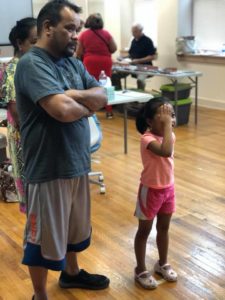
Dubuque also has a significant number of new residents from the Marshall Islands, and they are working to develop their own organizations and finding ways to be represented throughout the city. Every year in May, members of the local Marshallese community celebrate their culture and history on Constitution Day. Events typically include games, cultural dance performances, and authentic Marshallese cuisine. “We really wanted to bring awareness,” said Irene Mau, a Pacific Islander Community Health Worker, when interviewed by a local news station, “so they can understand what’s going on and what’s the biggest event here today.”
A Record of Collaboration
Collaboration among community members, nonprofit organizations, and the private sector is an important part of civic affairs in Dubuque. In an interview with the author, Dubuque City Manager Mike Van Milligen said he plans to retire in 2027. When asked what he’d want the next city manager to know, he said, “You don’t do things FOR people; you do things WITH people.” This is what is locally known as the “Dubuque way” of solving problems through community partnerships.
“I started here in 1993, and the new comprehensive plan was adopted in 1995 to replace the 1936 comprehensive plan,” Van Milligen said, “That’s when the road to community engagement started for the City of Dubuque.” The development of that comprehensive plan, and all the updates to it since, have included a very robust community input process, with the most recent update engaging over 6,000 residents, he said. “Since it works so well, it’s been a model that’s been repeated time after time on all kinds of different projects and programs and plans.”
One of the city’s core initiatives, Sustainable Dubuque, has a goal of making the city more sustainable while maintaining environmental and ecological integrity, economic prosperity, and social and cultural vibrancy. Sustainable Dubuque encourages residents of the city to take action by being involved in local projects and taking ownership of the health and wellness of their community.
Sustainable Dubuque also funds community initiatives through their community grants program, which is available to organizations, businesses, and residents. Approved projects that incorporate the organization’s principles and include an element of community engagement and/or education are eligible for a $2,500 community project grant to help fund their project. Past funded projects include the creation of a sustainable garden at The Boys and Girls Club of Greater Dubuque and the Air Quality Indicators Project.
Structures that Facilitate Engagement
By using key principles for structural change, such as bottom-up power-building and having a systemic focus on underrepresented communities, Dubuque has been able to build and maintain an organizational structure that not only encourages but relies on civic engagement to thrive.
The city’s Community Impact and Neighborhood Support Director, Antonio Mouzon, was inspired by his upbringing and background to continue to give back to community members in Dubuque. Mouzon’s responsibilities include oversight of the Multicultural Family Center staff. In an interview with the author, he explained the importance of building structures that engage historically marginalized and disengaged community members: “We see that needle move forward and forward every single day within this department,” he said. “People just love what it feels like to be engaged in their community, to give back, to make a difference, even far beyond their time here.”
From a city perspective, addressing disparities and equity “codesign”, as Mouzon put it, is key. “When people are less connected to different community leaders or organizations, they don’t have the access they need to really thrive. So, what we’ve been doing is trying to bridge the gap between community members who are impacted by disparities within our community and organizations that are connected to resources to address those disparities.”
Dubuque’s neighborhood associations were designed to address the concerns of residents by creating a citizen-led approach to local programming and acquiring grants for improvement and community-building. There are 13 recognized associations in the city, each with its own geographical boundaries and unique initiatives. The Downtown Neighborhood Association, established in 1995, had immediate goals of getting rid of rodents and litter in local alleyways, later working to advocate for anti-violence, Indigenous representation, and overall quality of life improvements for residents, businesses, property owners, and visitors. The Point Neighborhood Association, established in 2010, has addressed many environmental topics such as bat and animal control and was closely involved in the government’s Bee Branch Creek work.’
Dubuque’s neighborhood associations work at a local level the way the Community Foundation and its eight affiliate foundations work at a regional level. Both illustrate the importance of proximate leadership. People who live in the communities they represent understand and can address the unique issues they face. At the same time, they are part of a larger network that improves the quality of life across a broader geographical area.
This regional approach is key to the Community Foundation achieving its mission of empowering communities and igniting generosity. Through its affiliate structure, it works with communities to build local resilience and respond to pressing issues. Instead of developing one-size-fits-all solutions, the Foundation encourages community members to take the lead and develop sustainable, long-term programming that can continue to serve the region. The process inspires local leaders to continue to engage and invest in their community, contributing to resident-powered growth and development.
Furthermore, the Community Foundation’s grant programs enhance the capacity of nonprofits to sustain, expand, and deepen their work. The work of these nonprofits is not only deeply informed by the needs of the communities they serve, but also often aligns with the Foundation’s mission and values. The Community Foundation has awarded $94 million in grants since opening its doors in 2003 in areas like childcare, food distribution, the arts and education.
Measuring Progress to Spur More Progress
The fruits of Dubuque’s active community and civic engagement in areas like overall involvement, accessibility, and environmental sustainability are regularly measured and shared publicly. This enables citizens and other interested parties to know how their efforts are contributing to progress throughout the community.
The city’s 50% by 2030 Community Climate Action and Resiliency Plan highlights recommendations that will lead to a more resilient, clean, and economically prosperous city by reducing greenhouse gas (GHG) emissions in alliance with the Sustainable Dubuque vision. The Greenhouse Gas Emissions Inventory on the Sustainable Dubuque website shows how emissions have decreased over time, emissions by sector, and where the city can improve. According to the 2022 report, overall GHG emissions have been reduced by 34% since 2003, and emissions from all sectors, including on-road gasoline and diesel, landfills, commercial and industrial electricity, have declined between 2018 and 2022.
Sustainable Dubuque lists many activities being undertaken to reach their Climate Action Plan Goal, including the Bee Branch Watershed Flood Mitigation Project and investing in methane capture, public transportation, and city fleet electrification. Since the beginning of Dubuque’s Climate Action Plan, the city has used traveler data to optimize transit routes and introduce programs like Rack and Ride, which encourages multimodal transportation by giving cyclists a place to put their bikes when riding the bus. Because of these improvements, there has been a 16% increase in public transportation ridership in the past 5 years.
 Dubuque is also committed to creating housing and employment opportunities across the city. As of April 9, 2026, over 2,500 total lots and units have been either approved, under review, under construction, or completed in recent years. According to the Tax Increment Financing report, as of July 2023, over 6,000 jobs have been retained and over 6,800 jobs created.
Community members can also see progress on initiatives in which they’ve played a role, highlighting the city’s commitment to transparency and maintaining citizen involvement after the idea-gathering process. Imagine Dubuque 2037: Call to Action, Dubuque’ s comprehensive plan, was adopted in 2017 following a year of intense and targeted community engagement and outreach that brought together over 6,000 residents and stakeholders and gathered 12,500 ideas. After much community debate, the plan settled on 110 ongoing recommendations. According to the Imagine Dubuque Overview Dashboard, 8% of projects are complete and 72% are on track to be completed by the associated deadlines.
Addressing Disparities
The Dubuque community has worked hard to address citywide disparities and underserved populations. The city’s commitment to uplifting all members of the community is shown in how the city government and other organizations include people of all backgrounds in programs and support each other in times of crisis.
Mouzon said one of the city’s focus areas is addressing financial inequities in the community. The City of Dubuque has reimagined its approach to handling fines and is piloting a community impact service program that addresses unpaid water bills and the associated fees. “It’s a really cool initiative,” says Mouzon, “…residents who are unable to pay their water bill…they’re subject to get their water cut off, they can come to our office, and they can opt into this initiative based on income guidelines. And if they qualify, they can serve in our community, and we will address their water bill at a rate of $29.98 an hour.”
The Community Foundation has also played a key role in responding to issues stemming from the region’s diversifying population. For example, in 2012, IBM Corporation opened offices in Dubuque and brought with it a diverse, 1,300-person workforce. When some of the new employees noted that they didn’t feel welcome in Dubuque due to their race and ethnicity, IBM reached out to several community leaders, including the Community Foundation’s Nancy Van Milligen, for support. In response to this call to action, the Foundation established Inclusive Dubuque.
Inclusive Dubuque is a peer-learning network of partners committed to creating communities where all people are welcome and valued. While Inclusive Dubuque has evolved into new initiatives over the past 10 years, it spurred the creation of tools and workshops that local organizations have relied on to make their workplaces and community efforts more equitable.
Importantly, the creation of Inclusive Dubuque helped inspire the Community Foundation to adopt “equity and opportunity” as one of its core values, which continues to permeate its work across its focus areas, including education and economic mobility.
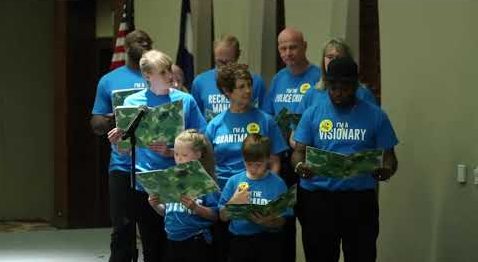
In 2021 and 2022, in response to the influx of refugees from Afghanistan in the United States, local individuals, churches, and nonprofit organizations worked together to provide refugees with services. At least two families have been resettled through the support of these groups through sponsorships from local churches and private individuals.
Another group that celebrates and elevates cultural diversity is Dubuque Unidos, which hosts the annual Latinx Fiesta mentioned earlier. The Fiesta was started six years ago. In an interview with National Civic League President Doug Linkhart, two of the group’s current organizers, Nicky Vedia and Arantxa Martinez Resendiz, both of whom are immigrants to the U.S., said the reason was that “we miss our culture, we miss our food, we miss our environment, we miss our friends, our family, everybody. So, we wanted a piece of that here, right? So we all brought it together to celebrate, to remember, to kind of make it feel home away from home.”
Conclusion
Dubuque’s transformation into the “Masterpiece on the Mississippi” serves as a powerful blueprint for how intentional leadership and robust civic engagement can revitalize a community. Through the collaborative efforts of city leadership, nonprofits like the Community Foundation of Greater Dubuque, and dedicated residents, the city has successfully navigated economic challenges to build a more resilient and sustainable future. By prioritizing transparency and creating structured pathways for participation, such as the Imagine Dubuque comprehensive plan and neighborhood associations, Dubuque has fostered a culture where every resident is empowered to help shape the city’s trajectory.
Ronnie Ward is a student seeking a Master’s Degree in Public Policy at the University of Maryland and was an intern at the National Civic League in spring 2026, working with League President, Doug Linkhart to produce this article.