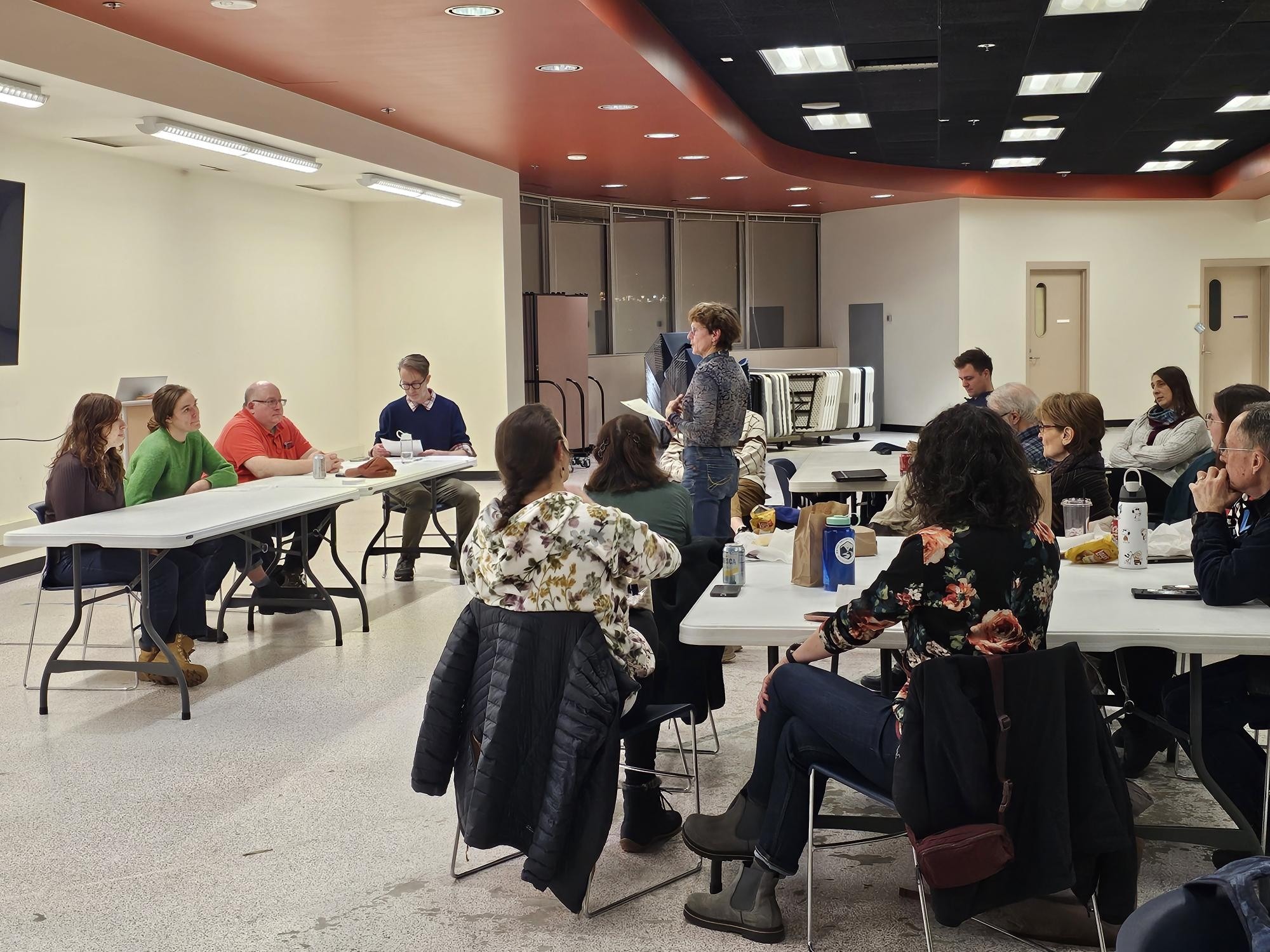
 On January 29, 2026, Anchorage residents gathered for a public forum that set out to do something both simple and profound: help neighbors “walk a mile in each other’s words.” Hosted by Perfect City, as part of the National Civic League’s Better Public Meetings program, the evening began with a civic arts exercise in which participants read transcripts from actual public meetings. By stepping into one another’s language, sometimes passionate and sometimes procedural, attendees were invited to reflect on how we show up in formal civic spaces and what might be worth changing.
The tone was intentionally forward-looking. After the reading exercise, the group shifted to a roundtable discussion about meaningful civic participation, what it looks like when it works, where the current system falls short, and what realistic improvements could take shape over the next 6 to 18 months. When asked what meaningful civic engagement looks like at its best, participants quickly moved beyond rules and procedures and into relationships. In a live word cloud, the largest responses were dialogue, listening, influential, collaborative, intentional, empathy, kindness, and community.
Residents described meaningful participation not as speaking into a microphone for two minutes, but as being heard in a way that shapes outcomes. The emphasis was relational. Good conversation instead of debate. Active listening instead of performance. Respectful exchange instead of polarization. Shared understanding instead of winning. Participants also expressed a strong desire for engagement to be influential. It was not enough to be allowed to speak. People wanted to see how their input moved projects forward, influenced decisions, or shaped priorities. The overall tone was hopeful, but practical.
Structural Barriers
The second round of discussion asked participants to focus on structural barriers rather than individual behavior. Several recurring frustrations surfaced.
Time and format were significant concerns. Long evening meetings, fixed agendas, and scheduling conflicts make participation difficult for many residents. Childcare, transportation, and work schedules create real barriers. The common format of community council meetings, often centered on one way testimony, was described as limiting. Words such as political theater, debate, and one-way appeared frequently. Speaking for two minutes at a microphone does not create dialogue.
Information and access were also recurring themes. Participants noted difficulty finding relevant materials, navigating substitute drafts released at the last minute, and understanding how decisions are shaped. Comments referenced disorganization, lack of knowledge, and confusion about where to find information. Residents expressed a desire for clearer pathways into participation and more consistent communication across forums.
A deeper concern centered on power and influence. Some participants described outcomes as feeling predetermined. Others spoke of power imbalance and questioned whether elected officials value community councils. These comments suggest that the challenge is not simply about meeting format, but about trust. When people believe decisions are already made, participation can feel performative rather than influential.
Culture and tone also matter. Divisiveness, hostility, dominant personalities, and incivility were cited as barriers. Even when meetings are largely respectful, the fear of conflict or intimidation can discourage broader involvement.
Practical Reforms
 When asked what should change in the next 6 to 18 months, participants gravitated toward practical reforms. They prioritized strengthening the connection between councils and everyday community life, replacing testimony-heavy formats with facilitated dialogue, institutionalizing feedback loops and follow-through, redesigning engagement pathways to broaden participation, and building sustainability through youth engagement and leadership succession. Residents are not simply asking for more meetings. They are asking for better-designed engagement systems.
Specific ideas reflected both creativity and pragmatism. Participants called for shorter, better-focused meetings with improved facilitation and less overloaded agendas. They emphasized closing the feedback loop by providing clear, plain-language updates that show how community input shaped outcomes. Expanded reporting formats, such as letters and summaries, were suggested.
Outreach was another priority. Ideas included mailing information to every household, using local media, and expanding communication beyond social media platforms. Many felt residents are not disengaged so much as unaware or disconnected.
Finally, participants urged making meetings more human. Suggestions included hosting gatherings in popular local venues, organizing brunches or bringing a neighbor nights, pairing artists with councils, and investing in community identity projects. These ideas reflect a desire to weave civic life into everyday spaces rather than confining it to only formal meetings.
The next phase of Better Public Meetings Anchorage will involve designing and iterating community council supports, training, and tools to enhance community participation.