By Nanke Verloo
Introduction
In the past decade, I have witnessed how governments try to involve citizens in decision-making. As an ethnographic researcher, I observed how urban residents organize against policies they oppose. I joined their protests and discussions with civil servants. After absorbing the stories and experiences of protesting residents, I would shadow municipal officials to see their perspective. These experiences added nuance to my view. The stories were not as simple as often expected. For instance, homeowners contested the construction of tall buildings unless they were intended for social housing, and green public spaces were protected. A community center needed renewal for more inclusive activities, while the welfare organization’s rules were excluding the very citizens they sought to engage. I observed that civil servants, who face competing demands between rapid housing development and democratic and sustainable processes, aim to listen to residents’ ideas. However, they would still label them as “NIMBY” citizens. As I gained insight into the perspectives from both sides, I noticed that the success of public participation does not depend on the strategies, tools, and creative forms of engagement that policy professionals prepare in advance but on what happens informally and often unintentionally “in between” that strategic process.
I am writing this article because many participation processes culminate in conflicts between municipalities and residents. This conflict not only undermines decision-making processes, but also erodes citizens’ broader trust in government. Residents begin to question whether the government will listen at any level if they fail to do so locally. Although we know that citizen participation cannot significantly enhance trust in politics given the limited demographics of the participants, it is crucial to prevent it from further damaging the relationship between residents and the government. How can we achieve this?
The answer, I argue, does not lie in better toolkits and strategic mechanisms, but in the very mundane and everyday interactions through which citizens experience their relationship with state actors. These situations disrupt pre-designed processes: a civil servant’s dismissive remark, a resident’s emphatic protest, or late document delivery. In interactions with public officials, people gain first-hand experience of their worth and value as citizens, whether they are taken seriously or not. Nevertheless, professional and academic discussions on public participation rarely clarify how that gap emerges. When is trust lost, and why? When do parties fail to understand each other? How exactly is the citizen “not heard”? These “in-between” situations cannot be strategized in advance and require public officials to improvise. Therefore, to improve public participation, we need to be able to reflect on and better manage the “critical moments” that determine the process’s success.
Before we can rethink the process of participation, we need to understand what we are discussing. The term “participation” has multiple meanings in both national and local policy contexts. In Europe, it commonly refers to “labor market participation” or “social participation”—where citizens organize activities for their neighborhood. In this essay, I focus on “political participation”: the processes in which citizens, entrepreneurs, and local experts participate in policy and spatial planning decisions. Two forms of political participation can be distinguished in governmental practice. First, the classic process of public participation, which involves citizens taking part in the development of plans by government bodies. In these, local governments start, strategize, and execute the process of involving citizens and other stakeholders in planning and policymaking.
An alternative process begins from the other end, with self-organized citizens’ groups that form to address social problems and require local governments to facilitate or support their activities. These citizens’ governance spaces are discussed in the work of Albert Dzur and Carolyn Hendriks. As these processes have different starting points, mandates, and ownerships, the critical moments of classic processes of public participation and processes initiated by citizens are different. Nevertheless, even in these latter processes, critical moments shape the relationship between state actors and citizens and are worth reflecting on. This essay focuses primarily on the former, because despite various efforts to innovate, most local decisions still occur through traditional citizen participation processes.
In comparing cases across different cities in the Netherlands, I identified five critical moments in the process where public participation often fails. The concept of critical moments is borrowed from the field of dispute resolution, where Sarah Cobb and David Laws use them to show how events can alter the dynamics between residents, municipalities, and other parties, signaling unexpected turns with lasting consequences. My own work has demonstrated how such moments can either escalate conflicts or worsen relationships; simultaneously, they can offer opportunities for improving the relationship between parties in decision-making processes. Critical moments are not a framework for improving participation. Instead, they offer reflection points that professionals and citizens can apply to their own processes, helping them better understand when it is wise to reflect on the unfolding relationships between parties.
Critical Moment 1: In-Between Being Friendly and Being Political
Public participation, at least in most countries in Europe and North and South America, takes place in the context of a constitutional democracy when elected officials have been given a democratic mandate by the public to make decisions. In this institutional context, the political agenda of elected officials determines the scope for alternative ideas and the extent to which citizens can co-create or co-decide in public participation. Public participation is an addition to democratic decision-making in democratic institutions. Contrary to expectations, a good participation process requires transparency about the political agenda and strict adherence to promises. I observed, however, that a common pitfall arises from a desire to be open and friendly. This is important, but in pursuit of involving as many people as possible, civil servants and elected officials often struggle to clearly articulate stringent political agendas and limited scopes for citizen power. I observed that the scope for alternative ideas and the power of citizens is frequently overstated by either local politicians or civil servants, causing confusion and false promises at the start of a process that should be about building trust.
Despite the growing popularity of citizen participation, local authorities should be much more careful in its implementation. Organizers should assess whether participation is appropriate for their specific policy or plan. In many cases I examined, participation was unsuitable or participatory decision-making promises went unfulfilled because of three recurring reasons:
- First, participation was intended to curb the resistance of stakeholders and diminish contradictions. We know that public participation rarely reduces resistance; instead, involvement often increases it. Rather than attempting to reduce resistance, participation should treat contradiction as a form of engagement that offers experiential knowledge, using local expertise to improve plans and policies.
- Second, when participation is used merely as a checked box for democracy. This occurs in processes where decisions have already been made, leaving little room for residents’ input. Officials often confuse “participation” with “information sharing,” which damages local democracy and officials’ credibility, as residents recognize the deception and feel subordinated to a governing elite. If there’s no room for alternative ideas, it’s better not to promise participation. Democratic governance can work through elected representatives communicating and executing their vision transparently. Public participation is suitable when alternative ideas are possible, and participation effectively strengthens policies and plans.
- Third, I observed that local governments sometimes use participation merely to gauge public reception of plans. If the goal is measuring public opinion, use surveys instead—don’t misrepresent it as participation. If city council members have doubts about a civil servant’s plan, they can have it reviewed by residents. This should be done with political will to adapt the plan based on local stakeholders’ expertise—not just to gauge responses. Public participation is suitable when there is space and the willingness to adapt and improve plans based on the knowledge and experiences of citizens and users, making them more sensitive to local needs and inclusive of diverse interests and knowledge.
The roles of both elected officials and civil servants are paramount in this first critical moment. While civil servants tend to avoid discussing uncertainty, feeling they must provide certainty, it’s better to communicate openly about it. Of course, scenarios of consequences are often unclear, solutions are uncertain, and the world around us changes at a rapid speed. But these existing dilemmas must be discussed. Instead of expecting that citizens don’t have the capacity to understand technical issues or cannot deal with uncertainty, it works much better if municipalities are transparent about uncertainties and contradicting outcomes and engage citizens in thinking through how to deal with them. Participation succeeds when stakeholders contribute to the solutions for uncertainties, using the co-creation principle that the best solutions emerge locally and interactively. That process requires both openness and transparency about political agendas and predetermined factors to remain essential, including national policies and existing zoning plans.
Public participation thus requires a balance between delivering bad news (limited scope, power, political agendas) and engaging residents to improve plans (stretching the scope where possible, citizen power, creative solutions and bottom-up knowledge). For elected officials, this means being open to new ideas, accepting uncertainty about outcomes, while remaining steadfast on political decisions. Public participation doesn’t require that administrators follow all citizen demands; it is actually helpful if politicians are transparent about their political visions for the future of a community or a city. Participation processes are inherently political; however, I observed that the political dimension was often avoided in all stages of the process. It is stripped to avoid conflict, with claims that decisions remain open to convince residents to participate without causing anger. However, administrators’ commitment to their beliefs and visions builds citizen trust in the participation process and local democracy.
I observed how administrators often push civil servants forward to tell the bad news of what has already been decided. Civil servants, understandably, tend to explain these decisions based on technical or bureaucratic arguments. These arguments are often apolitical; they present the facts in the most efficient or equal way forward, thereby excluding a political debate about the underlying visions of what kind of societal decisions produce. It would therefore be more democratic to start public participation with a public event in which elected officials provide a transparent and honest overview of the political agenda, related visions, and how these limit the scope and mandate for citizens. Simultaneously, participation events allow officials to engage directly in discussions about political decisions.
Critical Moment 2: In-Between Moving to the Future and Acknowledging the Past
Most participation processes involve residents with prior experience of participating or interacting with the government. These past experiences shape citizens’ expectations, interactions, and trust in government. Civil servants, however, often lack knowledge of these local histories. Municipalities appear to have limited capacity to transfer project-specific historical information to new staff. Local history and interpersonal relationships need attention in participation preparation, and that requires attention to emotions, personal interactions, and the diverse meanings of language.
Neighborhoods have a collective memory and history that are part of the participation process in social, physical, and emotional terms. The second critical moment I observed was when local authorities failed to acknowledge the local history and emotions. During the first interactions with citizens, these emotions need space. Instead of meetings that “look to the future with fresh eyes,” that can be counterproductive, a process could begin with “mourning for the neighborhood that once was” or expressing anger about failed previous processes. Only after acknowledging the past can space emerge for future possibilities.

A self-made model of the neighborhood created by citizens during an earlier participatory process. The model was not permitted to be presented at a public meeting about a new project that concerned the same area.
Language use is crucial in building interpersonal relationships between citizens and state actors. Words carry different meanings for different parties involved. The term “participation” itself varies in interpretation among stakeholders, yet discussions about its specific meaning rarely occur. Misunderstandings often arise between residents’ interpretation of civil servants’ statements and their intended meaning. Language choices can create confusion and resistance, especially when officials use terms such as “stakeholders” instead of “residents.” Therefore, establishing precise meanings of terms at the start of participation processes is vital. Consider how bureaucratic language might be interpreted differently by residents. “Nothing has been decided yet” means different things: for civil servants, it indicates that there is no final council decision yet; for residents, it suggests complete input opportunity and co-design potential. Such misaligned interpretations can lead to disappointment. Language remains crucial throughout the participation process when discussing levels of influence and creating an inclusive process for citizens with different languages or communication styles. At the start of the process, all stakeholders should determine the meaning of terminology that defines how participation input affects final decisions and what constitutes serious consideration of residents’ input. Throughout the process, participants can maintain reflection on the meaning of language that recurs to ensure that stakeholders’ experiences and knowledge are equally recognized.
I identified three key nuances to consider when approaching the second critical moment. First, collective memory can build community confidence, but sometimes creates defeatism, requiring focus on aspirations without misrecognizing memories. Second, when initiative is concentrated in one group, the collective memory may not be truly shared. If one narrative dominates, it can suppress other stories and groups. A solution is to meet separately with those identifying with the dominant narrative. Success in participation requires engaging with collective memories of different groups across periods and generations. The third nuance to the recommendation to acknowledge local history is that there is a risk of implementing this too simplistically or instrumentally. Suppose the information shared in these sessions is not used to improve the design of the emerging participation process. In that case, acknowledging emotions will only provide a very temporary improvement in the relationship between citizens and professionals. The aim at this critical moment is to treat existing emotions and experiences as a source of information about the neighborhood, to improve the design of the participation process, and to allow genuine human contact between officials and residents to develop.
Critical Moment 3: In-Between Inclusive and Substantive
During participation sessions, various tools are used to discuss topics creatively and accessibly. From scenario creation to playing with Lego, online gaming, collective designing, and creative problem solving, these innovative methods offer an accessible dialogue that does not necessitate technical knowledge. Still, they also serve as a distraction from the more political decisions underlying these decisions, hindering the more substantive conversations needed by stakeholders. I observed sessions using foam blocks to plan residential tower locations despite decisions already being made, and digital design sessions that left no time for discussions with civil servants. Some workshops focused on sketching community center designs, while residents preferred to discuss youth work programming. The creative methods engage residents at the drawing board but are only helpful when genuine co-creation is possible and aligns with the participation goals. Often, insufficient consideration was given to whether creative sessions suited the objectives, and the actual input scope was more limited than suggested. These methods diverted attention from critical discussions that residents wanted about spatial planning, facility preservation, and policy target groups—substantive, politically sensitive topics that needed attention.
This critical moment relates to the common assumption that low-threshold processes enable involvement of groups that rarely participate, such as less educated residents or those with limited language skills. While finding ways for diverse groups to contribute to decisions about their environment is democratically essential, the methods used warrant discussion. Making sessions more accessible through creative activities can exclude engaged residents seeking substantive discussion, while failing to reach non-participating groups. These groups often exercise citizenship differently, outside formal processes. Instead of primarily catering to these groups in formal meetings, engagement could be more effectively initiated in informal spaces such as community centers, mosques, or card clubs, where they can adapt to their everyday forms of political and social participation without the imposition of formal rules. Officials should use accessible language instead of government jargon, engaging carefully in these settings without interfering in daily life. This use of language presents an opportunity to develop a “bottoms up” approach to engagement, starting from the street level.

Image presented to citizens in Amsterdam to show an urban development project. Photo courtesy of the Municipality of Amsterdam
The participation process takes citizens seriously when providing space for substantive discussions about the future. Inviting responsible officials, such as traffic specialists, can encourage this. Civil servants often assume residents lack knowledge for such conversations, while many residents possess relevant expertise. If participation aims to improve plans, they should treat resident expertise accordingly and engage in meaningful dialogue.
Critical Moment 4: In the Black Box
Participation processes often conclude with a report documenting residents’ wishes and ideas. However, instead of marking the end of the process, this report is the start of a more internal process of policy development, planning, and decision-making. The translation of participation discussions into final plans remains unclear to residents, who are excluded from these subsequent planning stages. This part of the process is a black box that undermines their confidence in local democracy. While plans need not exactly match residents’ wishes, disappointment can be prevented through regular feedback and consultation about decisions and changes. The key question is not what comes out of the participatory process but how its content is integrated into planning and policy development.
Citizens reported long periods without updates—often months or years—and found their ideas absent from final plans, which largely matched pre-participation versions. They sought more transparency about planning choices. Some municipalities provided documents explaining how participant input was considered, though these were often hard to locate online. Despite this documentation, residents still questioned the impact of their input.
To build trust during the black-box phase, someone should represent residents’ interests and knowledge during planning and policy development, as currently no one advocates for local stakeholders’ perspectives.
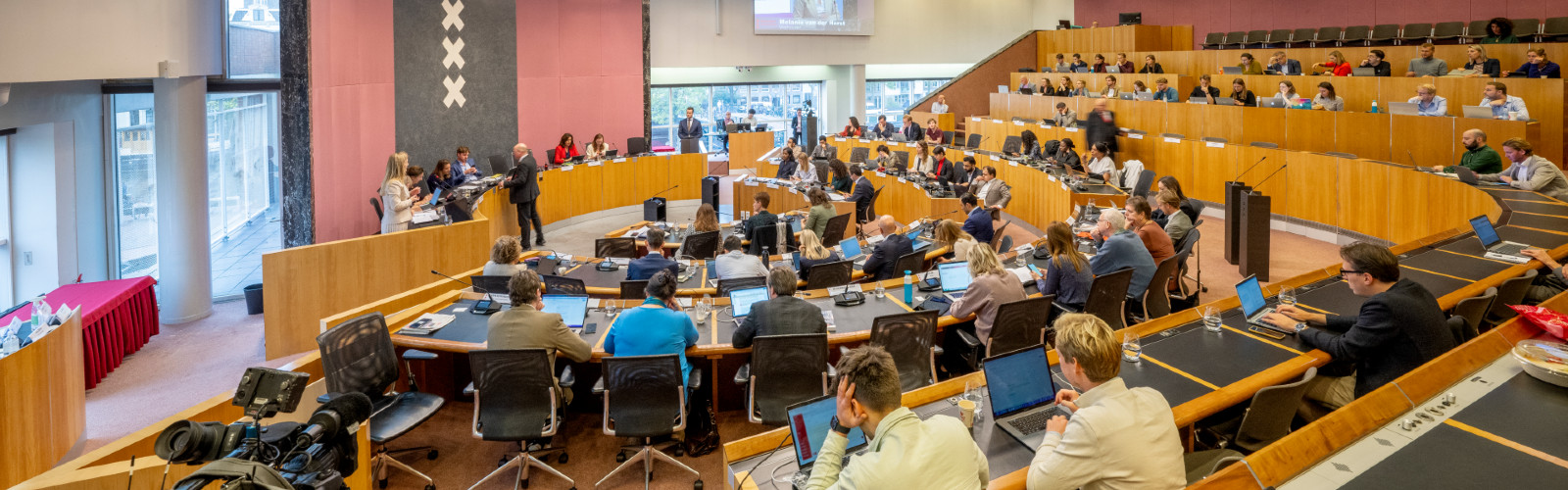
Council meeting of the Municipality of Amsterdam. Photo courtesy of the Municipality of Amsterdam
A lack of trust in local democracy features again when local councils have to make their final decisions and residents address the council during the time set aside for public comments. At this late stage, plans can only be accepted or rejected, not modified. The council separates plan quality from participation process quality, while citizens see these as interconnected. The process gets scrutinized while plans remain unchanged, frustrating residents who don’t see their input reflected. Additionally, influence depends on resident groups’ council connections, making the process less democratic. Therefore, incorporating residents’ ideas throughout the various critical moments is crucial rather than relying on final-stage input.
Critical Moment 5: In-Between the Private and the Public
Finally, I observed a fifth critical moment that is often overlooked in participatory strategies. This regards how groups of residents critical to a policy or decision are handled in decision-making. When conflicts arose between residents and local government, critical residents were frequently portrayed as unrepresentative. Questioning residents’ representativeness silences those who have committed themselves for months or years, implying they don’t act in public interest. Surveys that measure support may frame residents as NIMBY citizens, which is concerning. What is considered “the public interest” isn’t fixed but should be subject to ongoing social and political debates. Individual input is essential in relating personal interests to collective environmental challenges—the core purpose of participation. I noticed that all parties could convincingly use the “public interest” argument for support of opposite arguments. The solution was rarely found in determining who is right or most representative of “the public interest.”
Citizen participation doesn’t guarantee representative legitimacy. Representativeness can be addressed during preparation (critical moments 1 and 2) and through better resident engagement strategies (critical moments 3 and 4). Once the process begins, focus should be on improving plans with available input and diversifying the input if one group turns dominant. Questioning representativeness afterward undermines the participation process and engaged citizens’ commitment, merely justifying the execution of original plans while weakening local democracy.
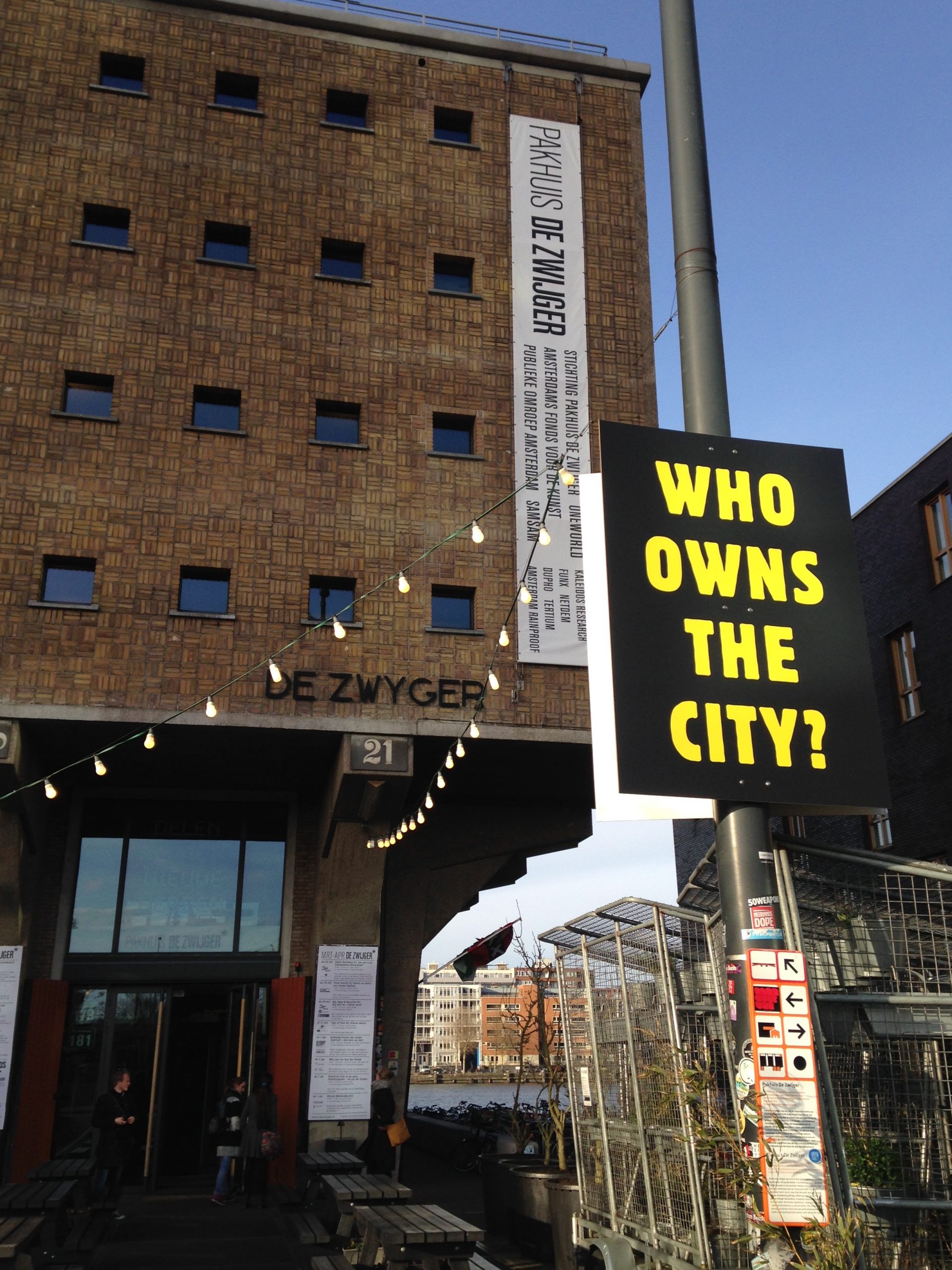
Public debate about who owns the city and who has the right to decide about urban development in Amsterdam.
Conclusions
The insights formulated about what can go wrong during the five critical moments in public participation processes provide an opportunity to reflect on our own actions in relation to the experiences and perspectives of others with whom we share the process. They offer insight into what I would like to call “interdependence”: the notion that in a good participation process, everyone is equally dependent on one another to reach better plans and decision-making. Of course, there are power imbalances; these are part and parcel of our democratic context and should be made visible and discussed openly. In a good participation process, this interdependence is celebrated, and everyone takes on their role. Inevitably, tensions will arise. These provide a chance to understand where friction exists, to recognize what truly matters and to whom. Additionally, in this article, I offer several points of criticism regarding the way political-administrative relationships are handled. In my view, the expertise required to improve local public administration does not consist of developing even more protocols. Rather, it is about being clear about one’s role, daring to engage in politics with ideals and preferences, and more strongly connecting each person’s own personality and moral compass with working for the public good.
Nanke Verloo is Associate Professor of Urban Politics and Planning at the University of Amsterdam, Dean of the Metropol program at the Dutch School of Public Policy, and editor-in-chief of the journal Policy & Society. Her research focuses on democratic innovation and the complex relationship between citizens and the state. As she aims to bridge the gap between academia and practice, her work is published in both academic journals and in political and societal outlets. This article is based on her research Democracy Beyond Participation, made possible by a VENI grant from the Dutch Research Council (NWO).
Bibliography
Cobb, S. (2006) Developmental Approach to Turning Points: Irony as an Ethics for Negotiation Pragmatics. Harvard Negotiation Law Review 11: 147-197.
Laws, D. (2020) What Use is a Critical Moment? Negotiation Journal 36(2): 107-126. DOI: 10.1111/nejo.12323.
Verloo, N. (2018) Social-spatial narrative: A framework to analyze the democratic opportunity of conflict. Political Geography 62: 137-148. DOI: 10.1016/j.polgeo.2017.11.001.
Verloo, N. (2023) Ignoring people: The micro-politics of misrecognition in participatory governance. Environment and Planning C: Politics and Space. London: SAGE, 23996544231182984