2026 All-America City Finalist – Montgomery, AL
Montgomery, Alabama carries one of the most consequential civic identities in the nation. Known as both the Cradle of the Confederacy and the Birthplace of the Civil Rights Movement, the city’s history is defined by contradiction and resilience. The Montgomery Bus Boycott and the Selma-to-Montgomery March ignited national change, yet the construction of Interstates 65 and 85 cut through historically Black neighborhoods, displacing residents and accelerating disinvestment that is still visible today. Black residents make up 62% of Montgomery’s population and experience a poverty rate of 30.8%, nearly three times that of white residents.
Over the last decade, Montgomery has gained momentum by confronting that history directly. In 2019, Steven Reed became the city’s first Black mayor, ushering in a new era of collaborative governance. The Equal Justice Initiative’s Legacy Museum and National Memorial for Peace and Justice have established Montgomery as a national destination for learning and reflection. A network of more than 200 neighborhood associations, nonprofits, and civic organizations works alongside local government to address housing, workforce development, and economic mobility. The three initiatives below reflect how Montgomery is translating that momentum into structural change, through its first comprehensive plan in 50 years, a reimagined neighborhood leadership system, and a community-centered innovation team working in the city’s most disinvested neighborhoods.
Envision Montgomery 2040
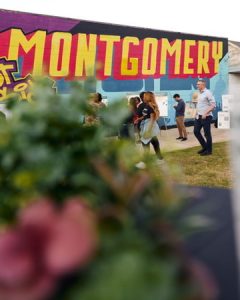 For more than 50 years, Montgomery lacked an updated comprehensive plan, leaving decision-making reactive rather than strategic and residents uncertain whether their voices meaningfully shaped long-term outcomes. Rebuilding that trust required more than a new planning document, it required a process that prioritized participation.
The city engaged residents over 16 months through the most extensive civic engagement effort in Montgomery’s recent history. A 46-member steering committee representing diverse sectors guided the process, while a Community Summit drew more than 500 participants and generated 3,000 ideas. District-wide open houses yielded more than 2,000 votes and comments, an online survey gathered input from 246 commenters, and youth and emerging leaders workshops ensured younger voices were included. Residents were invited not only to identify challenges but to shape solutions across five interconnected focus areas covering places, people, assets, connections, and infrastructure.
The resulting plan uses a matrix structure that links every community priority to specific, trackable actions, making accountability visible rather than assumed. Implementation is already well underway: a comprehensive zoning code update, including missing middle housing options and tree preservation amendments, is scheduled for completion by June 2026 with six additional public meetings. Historic preservation guidelines are under commission review, pedestrian and bicycle infrastructure improvements are nearly complete, and a climate resiliency assessment is nearing completion. Collectively, these efforts reinforce that participation produces tangible results guided by resident input.
Neighborhood Services Department
Across Montgomery’s more than 200 neighborhood associations, leadership was aging, participation was declining, and fewer residents understood how to get involved or why it mattered. The city recognized that strong neighborhoods are essential to civic trust, and that rebuilding them required more than small grants.
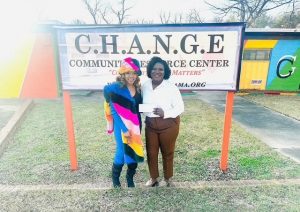
The Neighborhood Services Department overhauled its model, replacing a points-based grant system that provided funding but didn’t build lasting leadership capacity with a tiered curriculum linking education, mentorship, and funding. Four progressive programs — the Citizens Academy, Community Building Course, Sustainable Neighborhoods Course, and Nonprofit Academy — equip neighborhood leaders with skills in governance, stakeholder engagement, strategic planning, and nonprofit management. Each tier is paired with grants of up to $5,000, allowing neighborhoods to apply their learning immediately. An advisory board of professionals from various industries mentors participants through grant proposals and project implementation, providing ongoing support rather than one-time assistance. The training environment itself fosters cross-neighborhood connection, with participants learning from one another and building relationships across the city.
Over the past two and a half years, more than 175 residents from 50 neighborhood associations have completed at least one level of training, and more than $300,000 in grants has been distributed to over 70 recipients. Neighborhoods have used those resources to create playgrounds, distribute fire extinguishers and carbon monoxide monitors, launch anti-litter campaigns, and host community resource fairs. Moving forward, Montgomery will expand outreach to associations not yet engaged, hire a Spanish-speaking staff member to strengthen multilingual communities, and develop youth leadership pathways in partnership with Carver High School.
Montgomery Innovation Team
In North, South, and West Montgomery, thousands of vacant properties, aging housing stock, rising utility costs, and environmental vulnerability have created health risks and economic instability. Residents in these historically disinvested neighborhoods reported feeling overlooked and disconnected from city decision-making, creating a trust gap in addition to the physical challenges themselves.
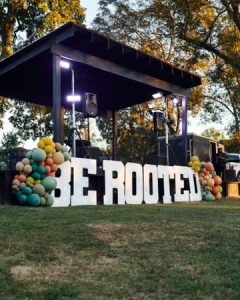 To address both, Montgomery partnered with the Bloomberg Center for Public Innovation to launch the Montgomery Innovation Team, a three-year effort to build community-driven solutions from the ground up. The team began with a six-month research phase that included more than 35 interviews with renters, homeowners, and landlords, over 30 expert interviews, and active participation in neighborhood association meetings and community spaces. Findings were shared publicly through community events, reinforcing transparency and accountability. Six Community Innovation Sessions then engaged more than 150 residents and city staff as co-designers, generating more than 250 ideas refined into 18 high-impact initiatives now in prototyping. Early programs include Resilient Roots, a community block party and civic innovation session, and the SEED Academy, a hands-on developer training program culminating in teams presenting proposals for attainable housing, historic preservation, and mixed-use revitalization.
Over the next 18 months, the Innovation Team will pilot and scale initiatives including rental licensing and habitability ordinances, youth workforce programs that weatherize homes, localized home repair hubs, and formal pathways for residents and small developers to steward city-owned lots, ensuring solutions are community-owned and built to last.
Some Related Posts
Thank You to Our Key Partners