2026 All-America City Finalist – Wichita, KS
Founded in 1870 as a trading post on the Chisholm Trail, Wichita grew into the Air Capital of the World, a city built on aviation, entrepreneurship, and Midwestern resilience. But like many American cities, the past decade tested its civic fabric. The convergence of the COVID-19 pandemic, economic disruption, and scrutiny of high-profile public-private development projects intensified skepticism toward local government. By 2023, the share of residents who believed local government was honest had fallen from 44 percent to 27 percent, and those who felt the city welcomed their involvement dropped from 47 percent to 34 percent.
Rather than dismissing that decline, Wichita confronted it directly. City leadership acknowledged past mistakes, increased transparency in development agreements, and fundamentally shifted its approach from persuasion to listening. By 2024, trust in government honesty had rebounded to 37 percent and perceptions of welcoming resident involvement rose to 45 percent. The work is far from finished, but the trajectory is clear.
The programs below reflect that commitment across three interconnected fronts: rebuilding civic trust through transparency and resident education, responding to homelessness with coordination and compassion, and strengthening the conditions for economic mobility.
Civic Engagement and Public Trust Infrastructure
Between 2018 and 2023, Wichita experienced a measurable decline in civic trust, with survey data showing a sharp drop in the percentage of residents who believed local government was honest and welcoming of public involvement. Many residents also expressed confusion about how local government functions. The challenge was two-fold: rebuild trust through tangible transparency and accountability, and equip residents with the knowledge needed to participate meaningfully.
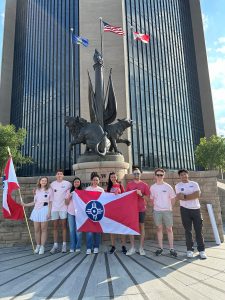 In response, Wichita developed its Public Trust Infrastructure, an interconnected system integrating civic education, structural reforms, and transparent communication. The Civic Engagement Academy, originally launched in 2018, is an eight-week leadership development program where participants interact directly with city staff and council members, learn how key decisions are made, and receive leadership training in partnership with the Kansas Leadership Center. The program has graduated 260 residents, many of whom have gone on to serve on boards, lead neighborhood associations, and pursue elected office. A civic education campaign produced 8,500 palm cards distributed at local events, providing residents with district maps, council contact information, and plain-language budget breakdowns. Structural reforms added evening council meetings, expanded public comment to every council meeting including monthly workshops, and introduced plain-language consent agenda descriptions. Weekly mayoral media briefings, a public transparency portal, and a publicly tracked council travel spreadsheet reinforced accountability.
The 2025 community survey showed record levels of engagement: 39 percent of residents watched a local public meeting in the past year and 22 percent contacted elected officials to share their views.
A Community-Wide Response to Homelessness
In 2022, Wichita’s Point-in-Time count revealed an 11.5 percent increase in the unhoused population since 2020, including a 103 percent increase in individuals living in places not meant for human habitation. The visible crisis created widespread concern about public safety, business disruption, and the welfare of unhoused neighbors.
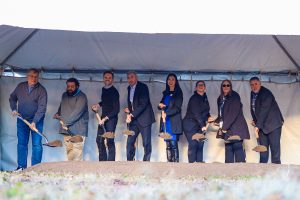
The city established the Homelessness Task Force in 2022, co-led by elected representatives from the city council and county commission and comprising 20 members from nonprofits, healthcare, law enforcement, the private sector, the faith community, and individuals with lived experience. Grounded in Housing First values, the task force organized into four subcommittees. The Strategic Communications subcommittee developed shared terminology and a quarterly public update process. The Housing and Economic Analysis subcommittee guided a study conservatively estimating the annual cost of homelessness at $20 million and developed NEXTenant, an online portal connecting case managers and landlords. The Coordinated Emergency Services subcommittee produced a free public training video on interacting with unhoused individuals and brought together police, sheriff, EMS, health centers, and the United Way’s Continuum of Care for the first time. The Provider Collaboration subcommittee drove the creation of Second Light, a 24/7 low-barrier shelter and one-stop service center housed in a renovated elementary school, funded by $14.5 million in local and ARPA dollars, now serving 170 people with capacity for 200 additional emergency beds and 21 on-site service providers.
In 2025, the city broke ground on Park Landing, a $15 million project adjacent to Second Light that will add 75 units of transitional and permanent housing, expected to open in mid-2027.
Every Person Empowered: A Bottom-Up Approach to Upward Mobility
A landmark Harvard study on economic mobility identified three major predictors of a child’s likelihood of rising from poverty to the middle class: healthy families, vibrant neighborhoods, and a connected community. Wichita has made those three predictors the anchors of its local strategy. Currently ranked 40th among the 100 largest U.S. metro areas for economic mobility, the city has set an ambitious goal of reaching the top 10 within a decade.
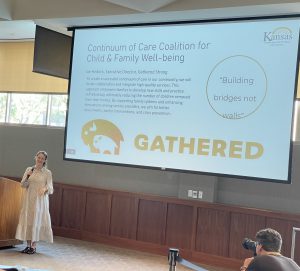 Wichita’s strategy mobilizes neighbors, faith communities, nonprofits, businesses, and civic leaders into a shared ecosystem organized around three pillars. On family stabilization, CarePortal connects schools and child welfare agencies to local churches and community members in real time, meeting more than 1,270 needs and serving 4,679 children with over $1.7 million in direct community impact. Family Promise helped 134 families avoid homelessness in 2025 alone. On neighborhood empowerment, Hope 4 Da Hood, led by former gang leaders, has helped more than 1,000 individuals leave gang life by connecting them to employment, housing, and recovery support, while Hope Community Development Corporation has 50 new affordable homes on track for completion within the next year. On community connection, the Neighboring Movement’s Eight Front Door Challenge encourages residents to know at least eight neighbors, with 80 percent of participants reporting a stronger sense of belonging.
In 2026, Wichita will launch Army of Normal Folks service clubs as one of six national pilot cities, making civic participation more accessible for everyday residents while continuing to scale financial resilience and housing programs.
Some Related Posts
Thank You to Our Key Partners