2026 All-America City Finalist – Norfolk, VA
Norfolk has endured fire, war, epidemics, segregation, and disinvestment, and each time, its identity has been renewed alongside residents who rebuild and reimagine. As the nation approaches its 250th anniversary, that legacy shapes how Norfolk governs: with communities, not for them.
That philosophy has guided Norfolk as it confronted challenges seen across legacy cities: concentrated poverty, aging public housing, limited mobility, and cycles of violence. Rather than imposing solutions, Norfolk embraced the lesson that meaningful change happens through deliberate civic partnership and shared accountability. Over the past decade, the city has shifted from transactional service delivery to shared governance, embedding residents in the planning, implementation, and evaluation of programs that affect their lives. Engagement is no longer episodic; it is structural. Family support specialists, violence interrupters, neighborhood service hubs, and place-based outreach models have become civic infrastructure rather than one-time interventions. Norfolk’s future is powered by its people.
People First: Stability Powered by People
For generations, families in the neighborhoods of Tidewater Gardens, Calvert Square, and Young Terrace built strong social networks rooted in faith, multigenerational relationships, and cultural identity; yet, they were routinely excluded from decisions that shaped their communities. When the city launched the St. Paul’s Transformation, a large-scale redevelopment effort encompassing all three neighborhoods, residents feared it would repeat a familiar national pattern: displacement, disruption, and communities fractured rather than strengthened. Norfolk responded by committing to a fundamentally different approach, one that began not with demolition but with people.
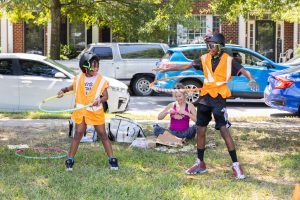 Before any redevelopment began, Norfolk launched People First as the human infrastructure anchoring the St. Paul’s Transformation. Residents helped select home types, green spaces, playgrounds, and even the new neighborhood name, Kindred. Dedicated Family Support, Workforce, Education, and Mobility Specialists work alongside families before, during, and after relocation through a whole-household model spanning developmental screenings for babies, tutoring and workforce exploration for youth, employment coaching and GED preparation for adults, and wellness and social programming for seniors. Advisory committees, resident working groups, and neighborhood briefings convene residents alongside faith partners, educators, and city staff to influence relocation sequencing, service design, and redevelopment timing. When families raised concerns about mid-year moves, timelines were adjusted. More than 94% of Tidewater Gardens households chose to participate.
The results reflect genuine transformation: 89% of participating families are stably housed, 133 residents secured jobs in the most recent year, average annual income has risen to $29,173, high school graduation stands at 92%, and 96% of residents maintain health insurance. Norfolk will apply these lessons to Young Terrace and Calvert Square, continuing to refine data-driven evaluation and resident leadership development as the model expands.
Community 1ST: Safety Powered by People
Five Norfolk neighborhoods, Young Terrace, Calvert Square, Huntersville, Diggs Town, and Oakleaf Forest, carried a disproportionate share of the city’s violent crime. Residents expressed a dual reality: they wanted fewer shootings and safer streets, but they also wanted dignity, respect, and genuine partnership in how safety was achieved. Traditional enforcement was necessary but insufficient to interrupt cycles of retaliation before they escalated.
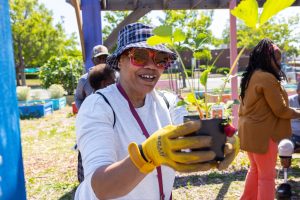 Norfolk launched Community 1ST, a structured Community Violence Intervention initiative embedded within the Department of Military and Community Affairs and implemented in partnership with community-based organizations. More than 60 credible messengers, all certified in trauma-informed intervention, conduct daily outreach in apartment courtyards, front steps, recreation centers, and schools. Their identifiable blue vests have become a trusted symbol of accessibility and consistency in neighborhoods that once felt overlooked. Biweekly performance reviews bring together intervention leadership, city staff, and public safety analysts to review outreach encounters, conflict mediations, and hotspot patterns alongside police incident data, ensuring prevention resources are deployed strategically. Norfolk Safe Starts extends the model directly into Norfolk Public Schools through mentoring, conflict mediation, and coordinated intervention planning.
Community 1ST has contributed to a 40% reduction in homicides citywide, with the most significant decreases in intervention neighborhoods. A majority of high-risk engagements have resulted in non-violent resolution without retaliatory escalation, and resident perceptions of neighborhood safety have improved measurably. Next steps include expanding Norfolk Safe Starts deeper into schools, strengthening workforce pathways for high-risk youth, and deepening behavioral health referral partnerships.
NeighborCare Norfolk: Belonging Powered by People
Even as housing stability improved through People First and violence declined through Community 1ST, residents identified fragmented access to opportunity. Families described difficulty navigating services spread across multiple offices, agencies, and locations, with transportation constraints, childcare responsibilities, and limited digital access creating structural gaps. Listening sessions surfaced challenges accessing mental health services, healthy food, workforce opportunities, and preventive healthcare. The problem was not the absence of services. Norfolk had strong public, nonprofit, healthcare, and workforce assets. The challenge was coordination, accessibility, and trust.
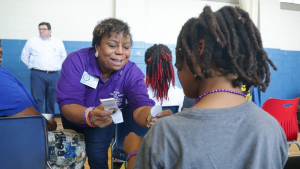 In response, Norfolk institutionalized NeighborCare as a recurring, place-based service coordination model operating in high Social Vulnerability Index neighborhoods. Guided by the NeighborCare Playbook, each event follows a structured cycle of planning, execution, and debriefing. City agencies, public health representatives, workforce organizations, housing partners, and Community 1ST credible messengers convene directly within neighborhoods, connecting residents onsite to housing navigation, workforce readiness, public health screenings, mental health referrals, youth mentorship, and violence prevention resources. Event timing and workshop topics are adjusted based on resident feedback, ensuring the model remains adaptive. An intergenerational initiative, InterGen, further reinforces civic health by connecting senior volunteers with youth in school settings.
Between August and December 2025, more than 700 residents participated and 50 enrolled directly into services through onsite referrals. InterGen pilot data showed a 28% decrease in behavioral incidents, a 43% reduction in failing grades, and 78% of participating seniors reporting a stronger sense of purpose. The next phase expands geographic coverage, deepens public health and workforce partnerships, and integrates data dashboards to track longitudinal impact.
Some Related Posts
Thank You to Our Key Partners