2026 All-America City Finalist – Jenks, OK
Some describe Jenks, Oklahoma as a suburb of Tulsa, a “little sister” to a larger neighbor. But those more familiar with Jenks understand it as a community where growth does not, will not, outpace human connection. Landlocked by design, Jenks has risen not by square miles but by cohesion, consistently demonstrating that civic health is built through shared effort. When record-setting rainfall caused historic flooding along the Arkansas River in 2019, there were no silos and no waiting for direction, residents showed up with tarps and sandbags, neighbors helped neighbors, and volunteers worked alongside city leadership. That collaborative spirit is woven into everyday life as well, anchored by a top-performing school district, the state’s only aquarium, a public library used by nearly one in three residents, and a revitalized Riverwalk developed in partnership with the Muscogee Nation that hosts cultural celebrations reflecting Jenks’ commitment to inclusion and mutual respect.
That same spirit shapes how Jenks governs and grows. Through collaborative planning processes, cross-sector partnerships, and strong volunteer networks, the city ensures residents actively shape its future. The three initiatives below show how Jenks translates its culture of connection into civic action, strengthening trust, participation, and shared responsibility across the community.
Shaping Jenks Ranch
In a landlocked city where every remaining acre carries weight, decisions about open land shape community character for generations, and can easily generate division. When Jenks acquired the Jenks Ranch property, more than 400 acres of undeveloped green space, city leadership chose to put one of the most significant land-use decisions in the city’s history directly in the hands of residents.
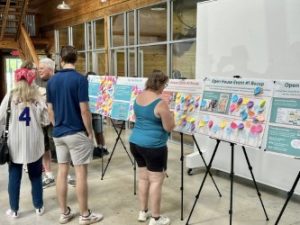 The city designed an inclusive, multi-layered engagement process that moved well beyond traditional public comment. More than 5,000 postcards were mailed citywide, and three open houses were scheduled at varying times to accommodate working families, seniors, and young professionals. Over 345 residents participated in person and 126 submitted detailed surveys. Participants engaged in visual preference surveys, interactive site-mapping exercises, a “Jenks Bucks” budgeting simulation requiring trade-offs across competing priorities, and a naming activity that generated more than 100 ideas. “What We Heard” boards documented earlier feedback at each session, demonstrating in real time how resident input was shaping the evolving plan. The final engagement event concluded with a community cookout where neighbors met and families lingered.
The process revealed strong consensus around preserving natural habitat, protecting Polecat Creek and surrounding wetlands, and prioritizing trails and flexible open space over commercial development. It also strengthened civic trust by demonstrating that public land decisions would be shaped through dialogue rather than decided in advance. Implementation will proceed in phases aligned with resident priorities, and the engagement model itself is now being applied to future planning initiatives citywide.
Jenks Engagement Committee
Civic participation in Jenks has never been a problem; long-standing service organizations including Rotary, Kiwanis, the Optimist Club, the VFW, and others have served the community for decades, yet their efforts often ran in parallel with informal communication rather than in coordination. The opportunity was clear: connect those already doing the work so their impact multiplies.
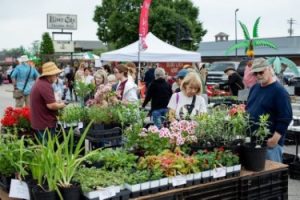
In 2024, Jenks established the Jenks Engagement Committee, inviting every established civic service organization in the city to a shared table with city leadership. The structure was intentionally inclusive rather than selective. Organizations meet quarterly to share updates, identify needs, and coordinate efforts, while remaining active in their own networks between meetings. The committee quickly became a resource network: groups now share volunteer capacity, coordinate calendars to avoid duplication, and amplify city initiatives through trusted community channels. The first major joint initiative is a citywide cornhole tournament, intentionally designed as a social, low-barrier gathering for families and neighbors, with proceeds funding a shared digital community calendar to be installed along Main Street. Where Jenks’ major institutions have historically maintained separate calendars, fragmenting awareness and limiting participation, the new sign will serve as a single, visible public invitation into community life.
The committee has reduced duplication, improved coordination, and strengthened trust between civic leaders and city officials. Participation at quarterly meetings continues to grow. Next steps include expanding youth representation, formalizing feedback mechanisms, and creating additional joint programming.
Codifying Conservation-Based Development
As Jenks continues to grow within its fixed municipal boundaries, remaining undeveloped land often contains wetlands, floodplains, and natural habitats that residents deeply value. Without a structural solution, preserving these areas would depend on case-by-case negotiation rather than enforceable policy, leaving community values vulnerable to shifting political winds.
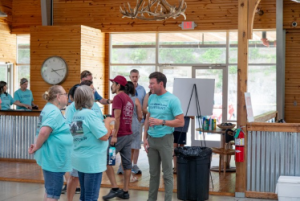 In 2023, Jenks updated its Unified Development Ordinance to incorporate a conservation-based cluster development framework, allowing higher density in designated areas of a site in exchange for permanently preserving environmentally sensitive land elsewhere on the property. The policy was developed through a transparent public process: Planning Commission hearings and City Council meetings invited resident comment, while open discussions with developers and property owners ensured the framework balanced environmental stewardship with economic feasibility.
Trade-offs were debated publicly, implications were outlined by staff, and elected officials deliberated in open session before adoption. The connection between policy and community values was further validated in 2025, when residents participating in the Jenks Ranch engagement independently ranked habitat preservation as their highest priority and directed the largest share of a community budgeting exercise toward wetland and natural corridor protection.
The framework has reduced conflict in land-use decisions, increased predictability for developers, and strengthened public trust in how growth is managed. Jenks will continue monitoring implementation, tracking preserved acreage, and refining the ordinance through ongoing transparent engagement.
Some Related Posts
Thank You to Our Key Partners