2026 All-America City Finalist – Franklin, TN
Franklin, Tennessee, strives to be “America’s finest hometown, driven by excellence, balancing preservation and progress.” As one of the nation’s fastest-growing cities, Franklin has experienced significant population growth and economic expansion, bringing both opportunity and complexity. Rather than allowing growth to erode what makes the community distinctive, Franklin has responded with intentional civic investment: engaging residents in governance and planning, honestly confronting difficult chapters of its history, and expanding access to parks, housing, and mental health resources.
Guided by a shared vision of civic health and resilience, Franklin continues to strengthen connections among residents, institutions, and local government. The following initiatives demonstrate how Franklin responded to extremism with engagement and inclusion, strengthened belonging through participation and dialogue, and empowered civic health across generations.
A Community That Said “Not In Our Town”
In October 2023, members of the Tennessee Active Club — a white nationalist organization whose members publicly self-identified as neo-Nazis — appeared at a mayoral candidate forum in the heart of Franklin’s historic downtown. There to provide “security” for a mayoral candidate with documented ties to extremist organizations, they attempted to physically block journalists from attending the public event and posted anonymous threats on buildings and around town, reading, “Always Watching, Always Listening, Always Near.”
For a city that had built its identity around inclusion, civic engagement, and honest reckoning with its history, this was not just a campaign controversy. It was an existential test of Franklin’s democratic character.
Franklin’s civic infrastructure, built intentionally over years, proved equal to the moment. Within 48 hours, the Franklin Board of Mayor and Aldermen issued a joint condemnation. The Board subsequently passed a formal resolution denouncing white supremacy. Civic organizations, business leaders, and neighborhood associations across the political spectrum added their voices. Investigative journalism—conducted despite personal threats from white nationalist operatives—revealed fabricated claims, concealed criminal history, and documented extremist ties, earning a Peabody Award and giving voters the full picture they needed.
On October 24, Franklin’s residents delivered their answer. Early voting surged more than 330% compared to the prior municipal election, and final turnout set a city record. The extremist-backed candidate was defeated 80 to 20 and every candidate on the coordinated slate lost decisively.
The civic aftermath is measurable. Franklin’s National Community Survey showed confidence in local government rose from 68% to 75%, perceptions of safety increased from 95% to 97%, and trust across multiple dimensions strengthened. Rather than eroding civic health, the crisis reinforced it, proving that when communities invest in civic infrastructure over years, they can call upon it decisively when democracy demands it.
Sustainable Civic Health
Franklin’s approach to sustainable civic health is grounded in a simple but powerful ethic: listen, engage, and solve problems together. At the center of this work is Franklin Tomorrow, a civic organization with a 25-year history of bringing residents, businesses, faith leaders, and local government together around shared priorities. Through recurring gatherings like Breakfast with the Mayors, a free quarterly event drawing 300 to 400 residents, and FrankTalks, a monthly forum on community topics held at the local community college, Franklin Tomorrow creates consistent opportunities for residents to connect with one another and with their government outside of formal civic settings.
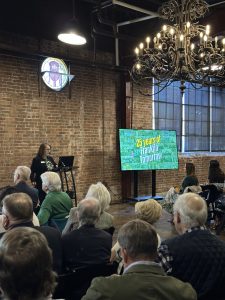
The city pairs this culture of gathering with creative communication strategies designed to make government accessible and human. The annual State of the City has evolved into a community celebration featuring music, videos, and department showcases where officials share accomplishments and inspire residents with the road ahead. Creative engagement outlets—including the City Administrator’s Monday morning “Top Three Things”, the new BOMA Brief condensing board meetings into one-minute summaries, and recurring segments like “Workzone Watch” and “Trash Talking Tuesday”—distill government activity into digestible, shareable formats that meet residents where they are.
Underpinning all of this is the FranklinForward strategic plan, developed through community surveys, business and faith leader focus groups, and youth engagement, and tracked through more than 60 key performance measures. Together, these efforts have strengthened participation, improved transparency, and reinforced trust, demonstrating that sustainable civic health requires intentional, creative, and consistent investment in community connection.
Fostering Healthy Democracy
As Franklin’s population grew by more than 30 percent between 2010 and 2020, ensuring that new and longtime residents alike have a meaningful voice became a daily focus for Franklin Tomorrow. As an independent nonprofit, Franklin Tomorrow can engage community groups and tackle difficult topics, like race relations and housing affordability, in ways that government sometimes cannot. Franklin Tomorrow intentionally removes barriers to participation, hosting most events at no cost, mailing newcomer postcards to new homeowners, and welcoming first-time attendees at events to ensure both new and longtime residents feel connected from the start.
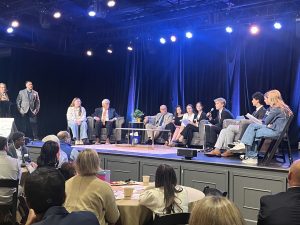 In late 2024, Franklin was selected for the Healthy Democracy Project, an initiative designed to build civic leadership and increase the capacity of participating communities to solve problems through inclusive civic engagement. A civic engagement survey of over 300 residents identified key barriers, 64% cited lack of time, 48% cited limited awareness, and surfaced priorities including: youth inclusion, affordable housing, and better representation of marginalized voices. A public forum of 65 residents, a leadership cohort of 30 stakeholders, and a Breakfast with the Mayors drawing 450 residents translated community input into actionable goals centered on civic awareness and youth participation.
These efforts have produced meaningful momentum. A Franklin Youth Advisory Council has been formed in partnership with every public high school, civic education conversations are underway with school officials at the middle school level, and a digital Civic Hub is being developed to connect residents with volunteer and engagement opportunities.
Some Related Posts
Thank You to Our Key Partners