2026 All-America City Finalist – Bowling Green - Warren County, KY
Founded in 1796, Bowling Green-Warren County, Kentucky developed along the Barren River and was propelled by the arrival of railroads, highways, and global manufacturing, connecting the city to national markets and economic opportunity. Economic development was not without its pitfalls, with the arrival of Interstate 65 and urban renewal in the 1960s and 70s displacing thriving African American communities and disrupting generational wealth. Ultimately, that history informs how the community approaches growth today, acknowledging and repairing past displacement.
As the fastest-growing city in Kentucky, Bowling Green understands that rapid growth can divide communities unless residents are engaged in creating a shared future. Bowling Green-Warren County has chosen the latter. Over the past decade, local government, educational institutions, nonprofits, neighborhood leaders, and private-sector partners have intentionally built structures that expand participation, strengthen collaboration, and ensure residents are active partners in shaping the community’s future. From innovative digital town halls and grassroots outreach to collaborative leadership academies and community belonging efforts, Bowling Green-Warren County’s civic ecosystem reflects a shared commitment to inclusive decision-making and long-term stewardship.
Downtown BGKY Ambassador Academy
For many years, a civic disconnect persisted between students at Western Kentucky University (WKU) and the broader Bowling Green community. Students were often seen as temporary residents — sources of traffic and weekend litter — rather than contributors with something to offer. Graduates left because the city hadn’t made space for them. To address this, the city partnered with WKU, nonprofits, local businesses, and civic leaders to launch the Downtown BGKY Ambassador Academy (DAA), deliberately recruiting across majors, backgrounds, and experiences.
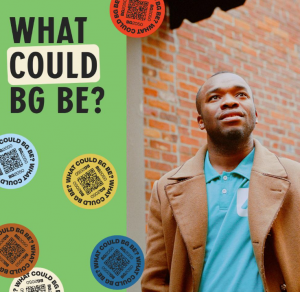
The Academy operated as a six-session immersive program designed to build civic literacy and social capital, bringing together more than 40 community partners and city leaders for hands-on engagement. Participants engaged in interactive experiences such as a mock Board of Commissioners meeting at City Hall, gained exposure to multiple city departments, and collaborated with nonprofits, arts organizations, and small businesses. The program removed barriers to participation by offering free enrollment, flexible scheduling, and donated resources. Its structure emphasized experiential learning, cross-sector collaboration, and direct access to decision-makers, ensuring students gained both knowledge of local governance and meaningful relationships within the community.
The results were measurable: 93.3% reported increased civic confidence, 100% felt more connected to downtown, and over 70% expressed greater interest in staying locally after graduation. Total city investment was approximately $350 — roughly $14.58 per participant — demonstrating that strengthening civic culture depends more on partnership than budget. DAA offers a replicable model for integrating young residents into long-term community leadership.
Bowling Green 2050 Community Visioning
Bowling Green-Warren County is projected to nearly double in population over the next 25 years. Community leaders made a deliberate choice: rather than let growth happen to them, they would shape it together with residents. The problem was that the tools for doing so were broken. Traditional public hearings attracted the same small, predictable group. Working families, shift workers, young adults, and rural residents were structurally excluded, not disinterested.
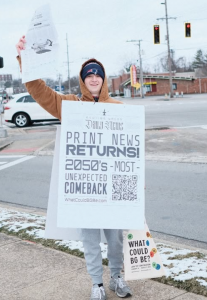
Rather than accept that limitation, Bowling Green partnered with Google Jigsaw and InnoEngine to launch BG 2050, a large-scale digital civic engagement platform that invited residents to contribute ideas, respond to others, and engage in open dialogue from any device, at any time. Backed by over 100 community partners, the process reached students, first-time participants, and communities of all backgrounds who had never before had a realistic pathway into formal planning conversations.
The results reframed what public participation can look like: roughly 8,000 residents submitted more than 4,000 ideas, generating over one million interactions. Afterward, 70% felt more confident their voice matters, and 83% reported better understanding of differing perspectives. Local leaders estimated the synthesized findings saved them an average of 28 days of work. BG 2050 is now a national model, drawing interest from cities across the country and internationally, demonstrating that inclusive governance requires redesigning participation, not simply promoting the same meetings more loudly.
Duncan Hines Days
Bowling Green found a shared identity through a unique collective ritual. Duncan Hines, born and raised in Bowling Green in 1880, became the country’s first food and travel influencer, publishing guidebooks from his home office that set the national standard for restaurant and hotel quality decades before Yelp existed. Rather than let that legacy fade into trivia, Bowling Green transformed it into an annual, inclusive civic celebration anchored in authentic local history: Duncan Hines Days.
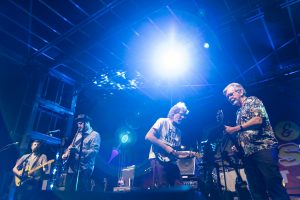 City and county agencies partnered with local businesses, nonprofits, cultural institutions, and residents to co-create a weeklong festival intentionally designed to give everyone a seat at the table. Programming spans interests, ages, and backgrounds, with free or low-cost events held in public spaces to ensure participation isn’t limited by income. From Restaurant Week and live music to pickleball, duck races, vintage car shows, and minor league baseball, there is something for everyone.
Duncan Hines Days was developed as a weeklong festival featuring over 50 events, more than 60 restaurant participants, 50 community partners, and numerous sponsors contributing to the initiative. Events activated parks, downtown spaces, and cultural venues across the community.
The festival has drawn over 45,000 attendees from at least 25 states and generated more than $6 million in economic impact. Beyond attendance, it has strengthened civic relationships, expanded public-private partnerships, and enhanced coordination across agencies.
Some Related Posts
Thank You to Our Key Partners